

What Are the Applications and Advantages of Soluble Fiber Inorganic Board in High-Temperature Insulation?
(1) Material Characteristics
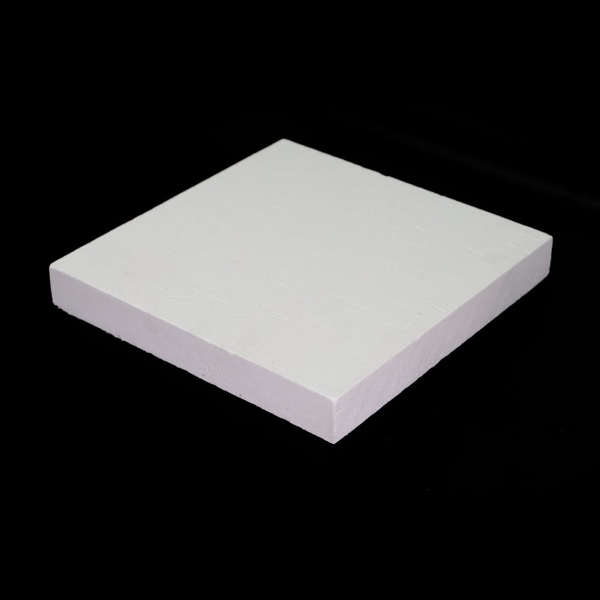
Soluble Fiber Inorganic Board is a lightweight, high-strength, and high-temperature-resistant insulation material that can withstand long-term high-temperature working environments without deformation or powdering. Its unique fiber structure provides excellent thermal stability and thermal shock resistance, making it highly suitable for industrial furnaces, heat treatment equipment, and building fire protection insulation applications.
(2) Production and Process Advantages
Through melting and spinning of high-purity inorganic raw materials, uniform forming, and drying processes, the density, thickness, and dimensions of the board can be precisely controlled. Modern production lines combined with automatic control and online inspection technologies ensure stable quality for each batch of products and compliance with international environmental standards such as asbestos-free composition and low emissions.
(3) Application Prospects
With the development of high-temperature industries and energy-saving buildings, Soluble Fiber Inorganic Board shows significant advantages in fire safety, thermal insulation, and environmental protection. It is widely used in industrial furnace linings, high-temperature pipeline insulation, fire-resistant walls, and building exterior wall insulation layers, providing reliable and environmentally friendly insulation solutions.
Soluble Fiber Inorganic Board combines high-temperature resistance, stability, and environmental performance. It is an essential material in modern high-temperature industries and energy-efficient buildings, bringing new opportunities to the high-performance insulation materials market.


