










1. Product Overview
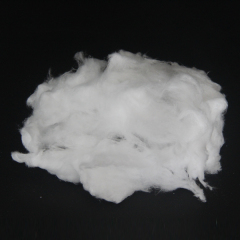
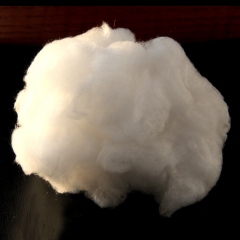
Ceramic fiber cotton features extremely low thermal conductivity, excellent thermal stability, and good mechanical strength. It is an indispensable insulation and heat preservation material in modern high-temperature industries. Ceramic fiber cotton is widely used in metallurgy, petrochemical, power generation, aerospace, military industry, and high-temperature heat treatment fields, providing excellent thermal insulation, fire protection, and heat resistance for equipment.
As a key product in the high-temperature insulation industry, ceramic fiber cotton can be processed into rolls, boards, blocks, or modular products, suitable for various industrial furnaces, pipelines, high-temperature equipment, and energy-saving insulation projects.
2. Product Features
▶ High Temperature Resistance
Ceramic fiber cotton can be used continuously at working temperatures of 1260~1600℃. It can withstand higher temperatures for short periods, ensuring stable performance under extreme working conditions.
▶ Low Thermal Conductivity
The thermal conductivity of the material is as low as 0.035~0.045 W/m·K, effectively reducing heat transfer and achieving energy-saving and high-temperature insulation performance.
▶ Excellent Thermal Stability
After multiple high-temperature cycles, it maintains physical properties and dimensional stability without powdering or peeling.
▶ Excellent Chemical Stability
It is resistant to most acid and alkali corrosion, suitable for long-term use in high-temperature chemical environments, and extends equipment service life.
▶ Good Mechanical Strength
Ceramic fiber cotton has high tensile strength, making it easy to cut, install, and transport, and suitable for equipment with complex shapes.
▶ Environmentally Friendly and Safe
It contains no asbestos or harmful substances, complies with RoHS and REACH standards, and can be safely used in industrial and construction fields.
▶ Various Specifications Available
Rolls, boards, blocks, modules, and special-shaped products are available. Thickness, density, and strength can be adjusted according to customer requirements.
3. Technical Parameters
| Parameter | Unit | Data Range |
| Product Name | — | Ceramic Fiber Cotton |
| Working Temperature | ℃ | ≤1260~1600 |
| Density | kg/m³ | 64/96/128/160 (Customizable) |
| Thermal Conductivity | W/m·K | 0.035~0.045 |
| Fiber Diameter | μm | 2~6 |
| Tensile Strength | MPa | ≥0.3 |
| Compressive Strength | kPa | ≥15 |
| Chemical Composition | % | Al₂O₃≥72%, SiO₂≤28% |
| Water Absorption | % | ≤1 |
| Combustion Performance | — | Non-combustible |
| Environmental Certification | — | RoHS, REACH |
4. Product Specifications
✅ Boards: Thickness 20~100mm, width 610~1200mm, length customizable.
✅ Rolls: Thickness 10~50mm, width 600~1200mm, roll length up to 50 meters.
✅ Modular Products: Suitable for high-temperature insulation of furnace linings or pipelines, density and thickness can be customized.
✅ Special Shape Products: Can be cut and molded according to equipment design requirements.
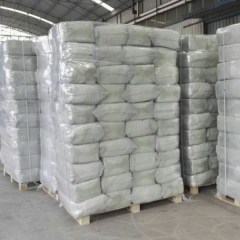
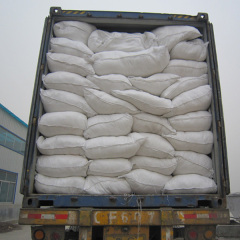
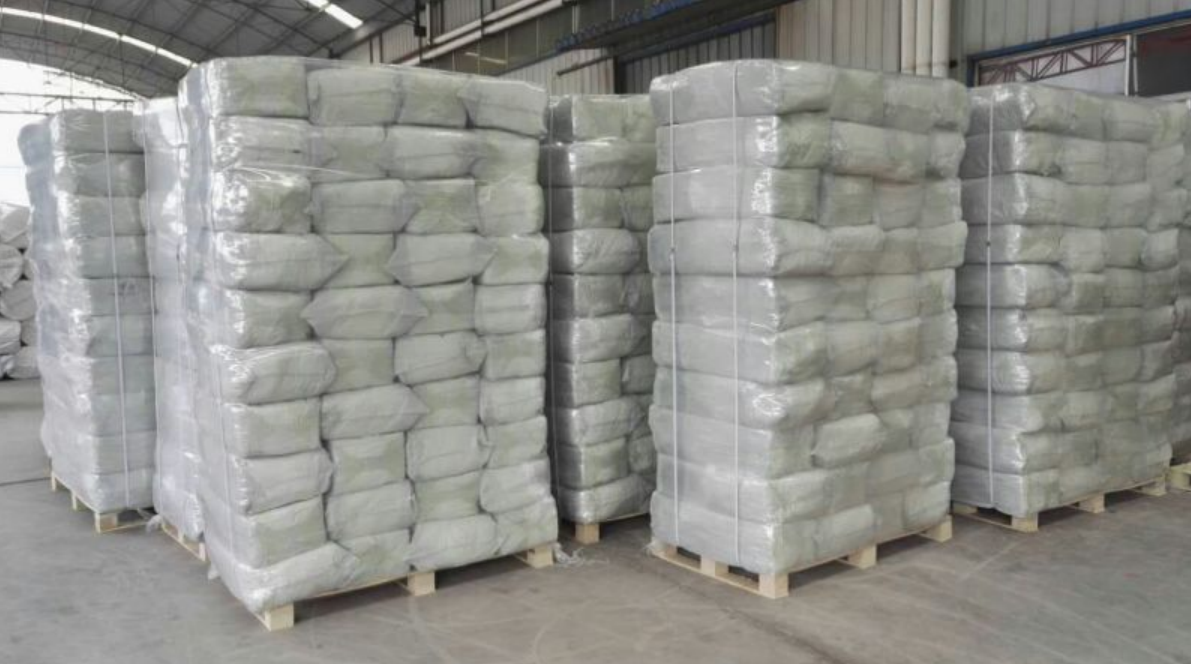
✅ Packaging: Cartons, woven bags, or pallets to ensure safe transportation and convenient storage.

5. Application Fields
★ Industrial Furnace Insulation
- Furnace linings and insulation layers for high-temperature heating furnaces, tunnel kilns, glass furnaces, and ceramic kilns.
- High-temperature heat treatment equipment to improve furnace thermal efficiency and temperature uniformity.
★ Metallurgical Industry
- Insulation materials for blast furnaces, ladles, tundishes, heating furnaces, and soaking furnaces.
- Energy-saving insulation and fire protection for high-temperature pipelines and equipment.
★ Petrochemical and Power Industries
- Thermal insulation protection for high-temperature steam pipelines, chemical reactors, and heat exchangers.
- Insulation and heat protection layers for power boilers and thermal equipment.
★ Aerospace and Military Industry
- Thermal protection materials for rocket nozzles, heat shields, and high-temperature airflow equipment.
- High-temperature testing equipment and special protection materials.
★ Building Energy Efficiency
- Exterior wall insulation systems, roof insulation, ceilings, and basement insulation.
- Fire barriers, fire door core materials, and safety protection layers.
6. Production Process
- Raw Material Melting: High-purity alumina and aluminum silicate are melted in an electric furnace.
- Fiber Formation by Spinning or Blowing: Uniform fibrous materials are produced.
- Mixing with Inorganic Binders: Improves mechanical strength and thermal stability.
- Vacuum Filtration or Compression Molding: Forms boards, rolls, or block products.
- High Temperature Drying or Curing: Ensures stable dimensions and density.
- Cutting and Packaging: Products are cut according to specifications and packaged for convenient transportation and installation.
7. Product Advantages
✅ Stable high-temperature performance, continuous working temperature up to 1600℃.
✅ Low thermal conductivity, significant energy-saving and insulation effect.
✅ Resistant to powdering and chemical corrosion, with long service life.
✅ Asbestos-free and environmentally friendly, meeting international safety standards.
✅ Flexible specifications and modular design suitable for complex equipment installation.
8. Installation Instructions
(1) Board/Roll Installation
- Use special fixing parts or adhesives for installation.
- Keep the installation surface dry and clean.
(2) Modular Installation
- Can be directly installed into furnace linings or equipment interfaces.
- Proper joint treatment is required to prevent heat leakage.
(3) Safety Protection
- Workers should wear masks, gloves, and protective goggles.
- Avoid inhaling fiber dust.
(4) Storage and Handling
- Store in a dry and ventilated place.
- Avoid moisture, heavy pressure, and direct sunlight.
9. Quality Control- Raw material purity inspection (XRF analysis)
- Fiber diameter and length inspection
- Density, thickness, and compressive strength testing
- Thermal conductivity and refractory temperature testing
- Water absorption, combustion performance, and environmental standard testi
- 10. Packaging and Transportation
- Roll or board packaging with waterproof film protection.
- Palletized transportation to prevent compression during long-distance shipping.
- Storage temperature: -10~40℃, avoid direct sunlight.
11. Service and Technical Support- Free sample testing and installation simulation
- Technical guidance and product selection recommendations
- Customized thickness, density, and composite materials
- After-sales service and quality issue handling
12. FAQQ1: What is the difference between ceramic fiber cotton and ordinary ceramic fiber?
A1: Ceramic fiber cotton has uniform fibers, stable density, and higher temperature resistance, making it suitable for continuous high-temperature applications.Q2: Can the thickness and density be customized according to requirements?
A2: Yes. Customized boards, rolls, and modular products are available.Q3: Is ceramic fiber cotton environmentally friendly?
A3: Yes. It is asbestos-free, contains no carcinogenic substances, and complies with RoHS and REACH standards.Q4: What should be noted during installation?
A4: Keep the installation surface dry, wear protective equipment, and avoid inhaling fiber dust during cutting.Q5: What high-temperature equipment is it suitable for?
A5: It is suitable for high-temperature furnaces, tunnel kilns, pipeline insulation, industrial heat treatment equipment, and other applications.Q6: Can it be combined with aluminum foil?
A6: Yes. Aluminum foil composite layers can be provided to improve insulation performance and moisture resistance.
