










1. Product Overview
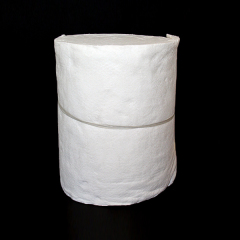
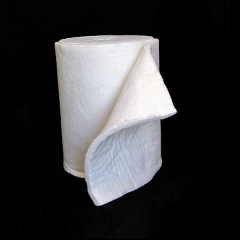
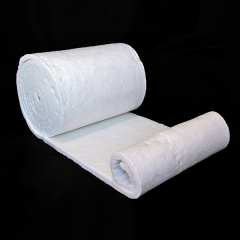
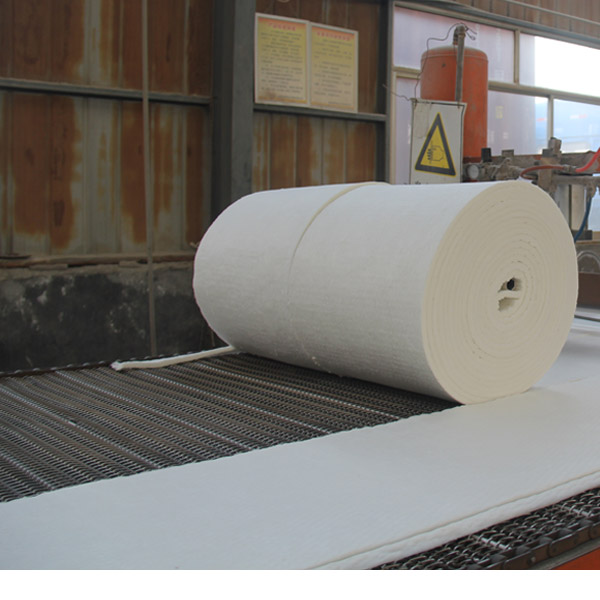
Ceramic fiber blanket is manufactured from high-purity alumina, aluminosilicate and other raw materials through high-temperature melting, fiber spinning, fiber homogenization and forming processes. It features a uniform fiber structure, excellent flexibility, easy cutting and balanced density. It can maintain stable performance during long-term exposure to high temperatures, making it an ideal insulation material for industrial furnaces, heat treatment equipment and high-temperature pipelines.
2. Key Performance Features
▶ Excellent High-Temperature Resistance
- Continuous operating temperature up to 1260°C
- Can withstand higher temperatures for short periods
- Maintains dimensional stability at high temperatures, helping prevent collapse and powdering
▶ Excellent Thermal Stability
- Maintains its physical and chemical properties after repeated high-temperature cycles
- Resistant to dusting and spalling
▶ Low Thermal Conductivity and Low Heat Capacity
- Provides efficient thermal insulation and helps reduce energy consumption
- Low heat capacity enables rapid heating and cooling, making it suitable for heat treatment furnaces with frequent start-up and shutdown cycles
▶ Excellent Chemical Stability and Corrosion Resistance
- Resistant to acids and alkalis
- Suitable for demanding high-temperature chemical environments
▶ Good Mechanical Strength and Flexibility
- High tensile strength and good structural integrity
- Easy to cut, install and lay
▶ Environmentally Friendly and Asbestos-Free
- Contains no asbestos
- Complies with RoHS and REACH environmental requirements
3. Technical Parameters
| Item | Unit | Parameter |
| Product Name | — | Ceramic Fiber Blanket |
| Operating Temperature | °C | ≤1260 |
| Density | kg/m³ | 64 / 96 / 128 / 160 (customizable) |
| Thermal Conductivity | W/m·K | 0.11 (400°C) / 0.18 (800°C) / 0.28 (1000°C) |
| Tensile Strength | MPa | ≥0.4 |
| Chemical Composition | % | Al₂O₃ ≥48%, SiO₂ ≤52% |
| Flammability | — | Non-combustible |
| Environmental Certifications | — | RoHS, REACH |
4. Product Specifications and Customization
- Thickness: 6–50 mm, customizable according to requirements
- Width: 610 mm standard, customizable
- Length: 7200 mm, depending on thickness
- Optional customization: aluminum foil lamination, fiberglass cloth lamination and special-shaped cutting
 5. Main Applications
 5. Main Applications
✅ Industrial Furnace Insulation
Used as furnace linings and insulation layers for ceramic kilns, tunnel kilns, glass furnaces and high-temperature heat treatment furnaces.
✅ Metallurgical Industry
Used for hot-face insulation of soaking furnaces, heating furnaces, ladles and tundish covers.
✅ Aerospace and Defense
Used as thermal insulation for rocket nozzles, thermal shields and high-temperature airflow equipment.
✅ Chemical and Power Industries
Used for insulation of high-temperature pipelines, reactor shells and heat exchangers.
High-Temperature Sealing and Fire Protection Structures
Suitable for fire door cores, high-temperature gaskets, expansion joints and other high-temperature sealing applications.
6. Installation and Construction
- Environmental requirements: Keep the installation area dry and well ventilated and avoid moisture.
- Cutting and installation: Can be cut with a knife and fixed using hooks or ceramic anchors.
- Installation recommendation: Can be combined with modular insulation systems to improve service life.
- Safety protection: Wear a mask, gloves and safety goggles to avoid inhaling fiber dust.
- Maintenance: Regularly inspect the insulation layer for completeness and damage.
7. Quality Control
- XRF analysis of raw materials
- Fiber diameter and uniformity inspection
- Thermal conductivity and tensile strength testing
- Fire resistance and environmental compliance testing
8. Packaging and Transportation
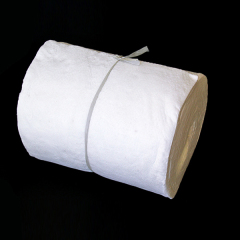
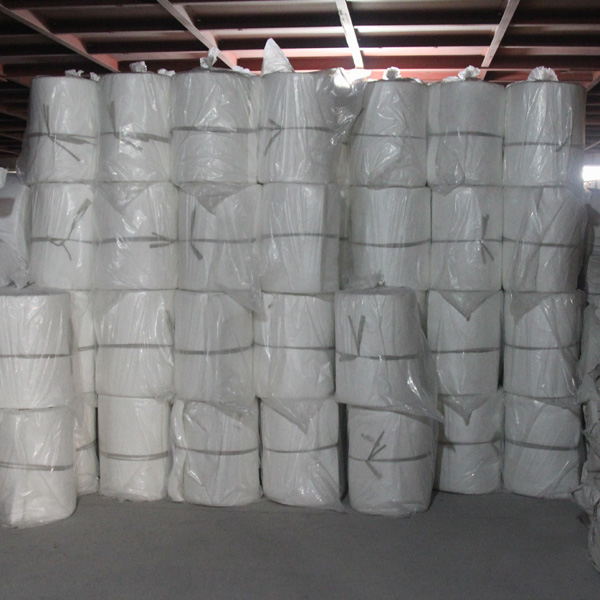
- Packaging: Roll packaging with moisture-proof film
- Transportation: Palletized transportation recommended to avoid compression
- Storage: Store in a dry and well-ventilated area and protect from rain and direct sunlight
9. After-Sales Service
- Free samples for testing
- Technical guidance and remote support
- Customized dimensions, density and composite layers
- Product warranty and replacement service
10. FAQ
Q1: What temperature can ceramic fiber blanket withstand?
A1: It can withstand continuous operating temperatures of up to 1260°C and higher temperatures for short-term exposure.
Q2: Is ceramic fiber blanket environmentally friendly?
A2: It is asbestos-free and complies with RoHS and REACH requirements.
Q3: Is ceramic fiber blanket difficult to install?
A3: No. It is flexible and easy to cut and install. It can be installed by cutting, bonding or using modular insulation systems.
Q4: Can the product be customized?
A4: Yes. Thickness, density, length and composite functional layers can be customized, including aluminum foil lamination.
Q5: What industrial applications is it suitable for?
A5: It is widely used in high-temperature furnaces and kilns, metallurgical furnaces, chemical pipelines, aerospace applications and fire protection structures.

