










Description
Review
Description
1. Product Introduction
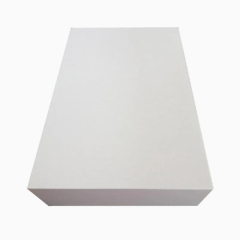
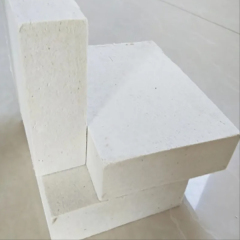
The bio-soluble ceramic fiber board maintains structural stability even in high-temperature environments. It is widely used in industrial furnace linings, heat treatment equipment, and casting insulation systems. It serves as an ideal alternative to traditional ceramic fiber boards, especially in applications with higher requirements for human health and environmental impact.
2. Product Features and Technical Parameters
The bio-soluble ceramic fiber board not only retains the high heat resistance, low thermal conductivity, and thermal stability of traditional ceramic fibers but also offers good biodegradability, meeting EU REACH, RoHS, and other environmental regulatory standards.
|
Item |
1260 Board |
|
Classification Temperature (℃) |
1260 |
|
Working Temperature (℃) |
≤1100 |
|
Permanent Linear Shrinkage (%) |
≤4 (950℃ × 24h) |
|
Thermal Conductivity (Average Temperature 500℃, W/(m·K)) |
≤0.153 |
|
Moisture Content (%) |
≤1 |
|
Loss on Ignition (%) |
≤8 |
|
Nominal Density (kg/m³) |
220–400 |
|
SiO₂ (%) |
60–68 |
|
CaO (%) |
25–35 |
|
MgO (%) |
4–7 |
|
Al₂O₃ (%) |
<1.0 |
|
Dimensions (mm) |
Thickness: 3–100 mm; Length: 600/900/1000 mm; Width: 300/600/1000/1200 mm; Customizable upon request |
Note: For additional technical specifications, please consult our sales manager.

3. Product Advantages
✅ Eco-Friendly and Safe
Bio-soluble: The material can degrade in the human body, reducing long-term health risks.
Low hazardous dust: Minimal dust during processing and installation, easy to handle and maintain.
Compliant with environmental regulations: Meets EU safety standards for inhalable ceramic fiber materials, requiring no special occupational protective measures.
✅ Excellent Thermal Insulation
Low thermal conductivity: Effectively blocks heat transfer even at high temperatures, offering significant energy savings.
Thermal shock stability: Maintains structural stability through multiple heating cycles without cracking or collapsing.
High insulation efficiency: Outperforms traditional calcium silicate and aluminosilicate boards at the same thickness.
✅ Superior Mechanical Properties
High compressive strength: Suitable for vertical structures or load-bearing applications.
Easy to process: Can be cut and shaped to fit various complex structures and components.
Good dimensional stability: Low shrinkage after heating, no deformation or collapse.
4. Application Fields
The bio-soluble ceramic fiber board is suitable for high-temperature equipment linings and insulation systems, with typical applications including:
l Industrial furnace linings such as heat treatment furnaces, car bottom furnaces, and bell furnaces.
l Insulation systems in aluminum, copper, steel, and non-ferrous metal industries.
l High-temperature thermal equipment such as glass melting furnaces, ceramic kilns, and incinerators.
l Insulation for high-temperature pipelines and equipment casings.
l Structural support and insulation boards for thermal testing platforms.
l Thermal and fire protection layers in the power and petrochemical industries.
5. Installation and Processing Recommendations
Ø The boards can be processed with conventional cutting tools (e.g., electric saws, hand saws).
Ø Wear a dust mask during handling to avoid inhalation of dust.
Ø Boards can be fixed to metal or refractory substrates using screws, ceramic anchors, or high-temperature adhesives.
Ø After installation, avoid moisture and mechanical impact.
6. Safety and Sustainability
The main component of bio-soluble ceramic fiber boards is bio-soluble silicate, which degrades effectively and does not accumulate in human lungs. It is classified by the World Health Organization (WHO) as a “non-carcinogenic material” and is recommended as a replacement for traditional RCF (Refractory Ceramic Fiber).
Compared with traditional ceramic fibers, bio-soluble materials have lower environmental impact during manufacturing, use, and disposal, aligning with global trends of green manufacturing and sustainable development.
Packaging and Transportation:
Each board is individually wrapped in a PE film for dust and moisture protection.
Boards are packed in standard cartons to prevent damage during transportation.
Custom sizes, thicknesses, and packaging options are available upon request.
Recommended storage in a dry, ventilated environment to prevent moisture affecting performance.

7. FAQ
Q1: What is the working temperature range of the bio-soluble ceramic fiber board?
A1: The board can operate continuously at up to 1100℃, with a short-term maximum of 1200℃. Actual working temperature depends on the application, thermal load, and operating cycle.
A1: The board can operate continuously at up to 1100℃, with a short-term maximum of 1200℃. Actual working temperature depends on the application, thermal load, and operating cycle.
Q2: How does it differ from traditional ceramic fiber boards?
A2: Bio-soluble ceramic fiber boards pose no long-term health hazards and can be dissolved and excreted by the human body. Traditional ceramic fibers (RCF) are biologically persistent and may harm the respiratory system. Bio-soluble materials also comply better with current international environmental and safety standards.
A2: Bio-soluble ceramic fiber boards pose no long-term health hazards and can be dissolved and excreted by the human body. Traditional ceramic fibers (RCF) are biologically persistent and may harm the respiratory system. Bio-soluble materials also comply better with current international environmental and safety standards.
Q3: How is its thermal conductivity? Does it insulate well?
A3: Bio-soluble ceramic fiber boards have an extremely low thermal conductivity (e.g., ≤0.09 W/m·K at 800℃) and provide excellent insulation, making them one of the most effective materials for high-temperature applications.
A3: Bio-soluble ceramic fiber boards have an extremely low thermal conductivity (e.g., ≤0.09 W/m·K at 800℃) and provide excellent insulation, making them one of the most effective materials for high-temperature applications.
8. Summary
As a new-generation eco-friendly refractory insulation material, the bio-soluble ceramic fiber board achieves an ideal balance between performance and health safety. It meets strict industrial high-temperature requirements while supporting green, sustainable development. Whether for industrial upgrades, equipment retrofitting, or new construction, it is a reliable high-temperature insulation solution.
For technical specifications, pricing, custom sizes, or other inquiries, please contact us at any time for professional one-on-one support.
Review
Review
Send your message to us

