


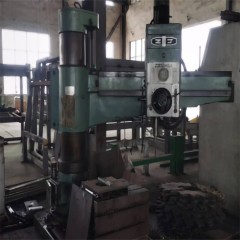


The electric furnace rock wool production line integrates advanced automatic control systems and environmentally friendly production concepts.
It can achieve:
· High production capacity;
· Low energy consumption;
· Low dust emissions;
· Stable product quality.
The rock wool products produced by this line feature:
· Stable physical properties;
· Excellent thermal insulation performance;
· Superior fire resistance;
· Good water repellency;
· High compressive strength.
The production line can be customized according to customers’ requirements to produce rock wool products with different:
· Specifications;
· Densities;
· Thicknesses;
· Dimensions.
It supports the production of various product forms, including:
· Rock wool boards;
· Rock wool rolls;
· Rock wool strips;
· Rock wool pipe sections.
The line is widely used in construction insulation and industrial thermal insulation applications.
The main production processes of the electric furnace rock wool production line include:
■ Raw Material Preparation
Natural mineral materials are selected, including:
· Basalt;
· Diabase;
· Limestone.
The raw materials undergo:
· Crushing;
· Screening;
· Mixing and homogenization.
This ensures stable chemical composition and consistent product quality.
■ Melting Process
The raw materials are heated to 1500–1600℃ in an electric arc furnace to form molten mineral material.
■ Fiberizing Process
The molten material is transformed into fiber through:
· High-speed centrifugal fiberizing equipment;
· High-pressure air blowing technology.
The resulting fibers have uniform diameter and excellent insulation properties.
■ Forming Process
The fibers are evenly distributed through a forming machine or vacuum forming system to create the initial insulation mat.
■ Thermal Curing and Shaping
An inorganic binder is applied to the fiber surface.
The material then passes through a drying furnace or curing furnace for high-temperature treatment, forming stable rock wool boards, rolls, or other insulation products.
■ Cutting and Packaging
After shaping, rock wool products are cut according to customers’ requirements.
Finished products are packed in:
· Bags;
· Cartons;
· Pallets.
This ensures safe transportation and convenient storage.
■ Exhaust Gas and Dust Treatment
The production line is equipped with:
· High-efficiency dust collection systems;
· Exhaust gas treatment devices.
These systems ensure environmentally compliant production.
3. Product Features
▶ Excellent Fire Resistance
Electric furnace rock wool can withstand temperatures of 700–1000℃.
Special products can resist temperatures above 1100℃, providing reliable fire protection and thermal insulation.
▶ Low Thermal Conductivity
The thermal conductivity can be as low as 0.035–0.045 W/(m·K).
It provides excellent insulation performance, reduces heat loss, and improves energy efficiency.
▶ Excellent Water Repellency
After surface treatment, the water absorption rate of rock wool can be lower than 1%.
The product provides excellent moisture resistance and maintains stable insulation performance under humid conditions.
▶ High Mechanical Strength
With high compressive strength, rock wool is suitable for:
· Building wall insulation;
· Roof insulation systems;
· Industrial equipment insulation;
· Pipeline insulation.
▶ Environmentally Friendly
The products:
· Do not contain asbestos;
· Do not contain harmful chemical substances.
They comply with international environmental standards:
· RoHS;
· REACH.
▶ Various Product Forms
The production line can manufacture:
· Rock wool boards;
· Rock wool rolls;
· Pipe sections;
· Strips.
This flexibility meets different requirements in construction and industrial insulation fields.
▶ Excellent Fire Protection Performance
Rock wool is classified as a Class A non-combustible material.
It can be used for:
· Fire-resistant walls;
· Fire doors;
· Thermal insulation of high-temperature equipment.

4. Technical Parameters
|
Item |
Unit |
Data Range |
|
Production Capacity |
ton/day |
5–30 |
|
Electric Furnace Power |
MW |
1–3 |
|
Thermal Conductivity |
W/(m·K) |
0.035–0.045 |
|
Fiber Diameter |
μm |
3–7 |
|
Compressive Strength |
kPa |
≥50 |
|
Density |
kg/m³ |
40–200 (Adjustable) |
|
Service Temperature |
℃ |
700–1100 |
|
Water Absorption |
% |
≤1 |
|
Raw Materials |
— |
Basalt, diabase, limestone, etc. |
|
Environmental Standards |
— |
RoHS, REACH |
5. Product Specifications
(1) Rock Wool Board
· Thickness: 20–100 mm
· Width: 600–1200 mm
· Length: Customized according to customer requirements
(2) Rock Wool Roll
· Thickness: 10–50 mm
· Width: 600–1200 mm
· Roll length: Up to 50 meters
(3) Rock Wool Pipe Section
· Diameter: 50–2000 mm
· Thickness: 20–100 mm
(4) Rock Wool Strip
The cross-section and dimensions can be customized according to customer requirements.
Various packaging options are available:
· Carton packaging;
· Woven bags;
· Pallet packaging.
The packaging ensures safe transportation and convenient storage.
6. Application Fields
(1) Building Insulation
The products are widely used for:
· Exterior wall insulation systems;
· Roof insulation (flat roofs and pitched roofs);
· Basement insulation;
· Ceiling and floor thermal insulation.
(2) Industrial Pipelines and Equipment
Suitable for thermal protection of:
· High-temperature steam pipelines;
· Hot water pipelines;
· Industrial boilers;
· Heating furnaces;
· Heat exchangers;
· Petrochemical equipment;
· Power generation equipment;
· Metallurgical equipment.
(3) Fire Protection and Thermal Insulation
Used for:
· Fire-resistant walls;
· Fire partitions;
· Fire door cores;
· Thermal insulation jackets;
· Expansion joints.
(4) Special Applications
Suitable for:
· Cold storage insulation;
· Thermal isolation of ships and transportation facilities;
· High-temperature furnace linings.
7. Advantages of Production Line
High Automation Level
The entire production line is controlled by a PLC automatic control system.
It can intelligently monitor:
· Temperature;
· Production speed;
· Product density.
Energy Saving and Environmental Protection
The high-efficiency electric arc furnace design provides:
· Lower energy consumption;
· Reduced emissions;
· Improved melting efficiency.
Flexible Production
The production line can quickly adjust:
· Production capacity;
· Product density;
· Product thickness.
It can meet different market and customer requirements.
Stable Product Quality
The production process ensures:
· Uniform density;
· Accurate dimensions;
· Consistent performance.
Easy Installation
Rock wool products are:
· Easy to cut;
· Convenient to install;
· Suitable for different construction conditions.
International Standards
The production line and products comply with:
· ISO standards;
· CE certification requirements;
· International environmental standards.
8. Installation and Construction Guide
✅ Rock Wool Board Installation
· Use special anchors or adhesive materials for fixing.
· Keep the wall or equipment surface dry and clean before installation.
✅ Rock Wool Roll Installation
· Rolls can be cut according to actual requirements.
· Mechanical or manual installation methods can be used.
✅ Rock Wool Pipe Section Installation
· Fix with steel straps, aluminum foil, or protective jackets.
· Properly seal joints to prevent heat leakage.
✅ Safety Protection
During installation, workers should wear:
· Protective masks;
· Gloves;
· Safety glasses.
Avoid inhalation of dust and prolonged skin contact.

9. Quality Control
To ensure stable product quality, the production line adopts a strict multi-stage quality control system.
Raw Material Inspection
Testing includes:
· Chemical composition;
· Moisture content;
· Impurity detection.
Melting and Fiberizing Control
The production process controls:
· Fiber diameter uniformity;
· Fiber length consistency;
· Fiber formation stability.
Forming and Curing Inspection
Main parameters tested include:
· Density;
· Thickness;
· Compressive strength.
Environmental and Safety Inspection
Monitoring includes:
· Dust emissions;
· Exhaust gas emissions;
· Compliance with RoHS and REACH requirements.
Finished Product Inspection
Final products are tested for:
· Dimensions;
· Thermal conductivity;
· Service temperature;
· Water repellency.
10. Packaging and Transportation
Packaging Methods
Products are supplied in:
· Roll form;
· Board form.
Outer packaging includes:
· Waterproof film;
· Carton packaging;
· Pallet protection.
Transportation Recommendations
Recommended transportation methods:
· Palletized transportation;
· Avoid heavy pressure or deformation;
· Protect products from rain and moisture.
Storage Conditions
Recommended storage conditions:
· Store in a dry and well-ventilated area;
· Temperature: -10~40℃;
· Avoid direct sunlight;
· Avoid heavy stacking pressure.
11. After-Sales Service and Support
We provide comprehensive technical support:
✨ Provide samples for testing and professional material selection advice.
✨ Provide installation training, construction solutions, and remote technical guidance.
✨ Support customized production, including:
· Special density;
· Customized thickness;
· Surface treatment.
✨ For product quality issues, we provide:
· Technical solutions;
· Product replacement support;
· Professional after-sales assistance.
12. FAQ
Q1: What is the difference between electric furnace rock wool and rotary furnace rock wool?
A:Electric furnace rock wool is produced by melting raw materials in an electric arc furnace.
Advantages include:
· Stable production quality;
· Easy adjustment of density and thickness;
· Suitable for various product specifications.
Rotary furnace rock wool has high production capacity, but density adjustment is relatively more difficult.
Q2: Can the production capacity of the line be adjusted?
A:Yes.The production capacity can be adjusted by controlling:
· Electric furnace power;
· Fiberizing speed;
· Forming speed.
The normal production capacity range is 5–30 tons/day.
Q3: Is rock wool environmentally friendly?
A:Yes.Electric furnace rock wool does not contain asbestos or harmful substances.
It complies with:
· RoHS;
· REACH standards.
It is safe for use in construction and industrial insulation applications.