








Description
Review
Description
1. Product Overview
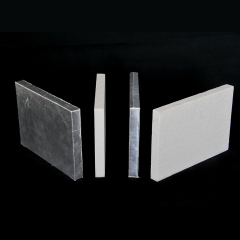
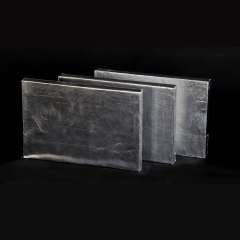
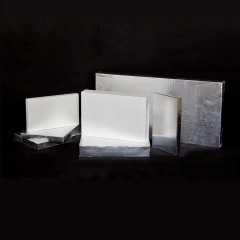
Aluminum foil fiber board is an advanced high-temperature insulation material, manufactured by high-temperature composite processing of a high-quality ceramic fiber substrate and an aluminum foil layer. Its structure perfectly combines the low thermal conductivity of ceramic fibers with the high reflectivity of aluminum foil, achieving dual insulation against both conductive and radiant heat. This material is lightweight, flexible, and exhibits excellent high-temperature resistance and mechanical strength, effectively meeting insulation requirements in harsh industrial environments.
Aluminum foil fiber board is widely used in metallurgy, petrochemicals, power generation, aerospace, and energy-efficient construction. It is especially suitable for high-temperature furnaces, pipeline equipment, and thermal/fire insulation systems. Its outstanding energy-saving and environmentally friendly performance make it an important material for reducing energy consumption and emissions in modern industry and construction.
Aluminum foil fiber board is widely used in metallurgy, petrochemicals, power generation, aerospace, and energy-efficient construction. It is especially suitable for high-temperature furnaces, pipeline equipment, and thermal/fire insulation systems. Its outstanding energy-saving and environmentally friendly performance make it an important material for reducing energy consumption and emissions in modern industry and construction.
The boards we produce are available in various specifications and densities to meet customer-specific requirements. Through strict quality control and advanced production processes, we ensure stable performance and long service life, earning high recognition from the market and customers.
2. Product Advantages and Core Competitiveness
ü The core advantage of aluminum foil fiber board lies in its composite structure. The ceramic fiber layer blocks conductive heat, while the aluminum foil layer reflects radiant heat. Together, they effectively reduce heat transfer to the exterior and significantly enhance insulation. Compared to conventional single-layer materials, aluminum foil fiber board can reduce heat loss by approximately 20%-30%, greatly improving energy efficiency.
ü The substrate uses high-purity ceramic fiber with a temperature resistance up to 1260℃, maintaining stable physical and chemical properties under long-term high-temperature conditions. The aluminum foil layer withstands temperatures up to 400℃, resisting oxidation or delamination, ensuring overall reliability and durability.
ü Supported by high-strength fiber substrate, the boards have excellent compressive and tensile strength. They are flexible, resistant to breakage, and convenient for on-site cutting and installation, reducing loss during transport and construction and lowering maintenance costs.
ü Aluminum foil fiber boards are asbestos-free and contain no carcinogens, complying with EU RoHS and REACH regulations to ensure environmental and personnel safety. Their non-toxic and odorless characteristics make them suitable for various industrial and public building applications.
ü Customization is available with different densities (96, 128, 160 kg/m³), thicknesses (6–50 mm), and aluminum foil thicknesses (0.03–0.05 mm). Composite layers can be designed for specific conditions to enhance insulation, fire resistance, and moisture protection, helping clients achieve optimal engineering performance.
3. Technical Specifications
Aluminum foil fiber boards are rigorously tested and verified to meet various industrial application requirements. Main technical parameters:
Operating Temperature: Substrate up to 1260℃, aluminum foil layer up to 400℃
Operating Temperature: Substrate up to 1260℃, aluminum foil layer up to 400℃
Density: 96, 128, 160 kg/m³, customizable
Board Dimensions: Standard width 610 mm, length 7200 mm, thickness 6–50 mm, multiple options available
Thermal Conductivity: 0.16 W/(m·K) at room temperature, 0.28 W/(m·K) at 400℃
Tensile Strength: ≥0.35 MPa
Combustion Performance: Non-combustible, does not release harmful gases
Chemical Composition: Al₂O₃ ≥ 45%, SiO₂ ≤ 55%, asbestos-free, heavy metal-free
Environmental Certification: Complies with RoHS and REACH standards
Additional options include different aluminum foil thicknesses (0.03–0.05 mm) and special composite layers, such as waterproof membranes or vapor barriers, to meet various working conditions and customer requirements.

4. Applications
Due to its excellent insulation performance and environmental friendliness, aluminum foil fiber board is widely used in high-temperature and energy-saving fields, including:
(1)Industrial Furnaces: For lining and insulation of ceramic, glass, tunnel, and high-temperature heat treatment furnaces, improving thermal efficiency and reducing energy consumption.
(1)Industrial Furnaces: For lining and insulation of ceramic, glass, tunnel, and high-temperature heat treatment furnaces, improving thermal efficiency and reducing energy consumption.
(2)Petrochemical Industry: Insulation of pipelines and equipment, excellent corrosion resistance, suitable for complex chemical environments.
(3)Power Industry: Boiler and pipeline insulation in thermal and nuclear power plants, ensuring stable operation and enhanced safety.
(4)Aerospace and Defense: Thermal protection for engines, missile insulation layers, and other critical components, ensuring safety in extreme conditions.
(5)Energy-Efficient Construction: Wall and roof insulation materials for green buildings, meeting energy-saving and environmental requirements while improving building comfort.
(6)Automotive and Machinery Manufacturing: Engine insulation, fireproof partition panels, enhancing equipment performance and safety.
5. Installation and Handling
To ensure optimal insulation performance and longevity, consider the following during installation:
ü Site Preparation: Keep the construction site dry and clean, avoiding moisture and oil contamination.
ü Cutting and Fixing: Boards can be cut on-site using specialized tools. Wear protective equipment to prevent fiber dispersion. Fixing methods include high-temperature nails, expansion bolts, or special heat-resistant adhesives.
ü Joint Treatment: Seal joints tightly to prevent heat leakage. Use high-temperature sealing strips or aluminum foil tape.
ü Safety Protection: Workers should wear masks, goggles, and gloves to avoid inhaling fibers or skin contact.
ü Maintenance: Prevent mechanical impact and moisture penetration. Regularly check that the aluminum foil layer is intact, without damage or delamination.
6. Performance Comparison
|
Feature |
Aluminum Foil Fiber Board |
Traditional Ceramic Fiber Board |
Rock Wool Board |
|
Maximum Temperature |
1260℃ |
1100–1400℃ |
700–1000℃ |
|
Reflective Insulation |
Excellent (aluminum foil) |
None |
Poor |
|
Mechanical Strength |
Good |
Average |
High |
|
Weight |
Light |
Light |
Heavy |
|
Environmental Performance |
High (asbestos-free, RoHS/REACH) |
Average |
Good |
|
Installation Convenience |
Easy (cuttable, composite) |
Easy |
Poor |
|
Price |
Medium-High |
Medium |
Low |
Aluminum foil fiber board clearly outperforms traditional ceramic fiber boards and rock wool boards in overall performance and energy efficiency, making it ideal for high-end insulation applications.
7. Quality Control
The company strictly follows international quality management systems, including:
Raw material purity analysis (XRF spectrometer)
Raw material purity analysis (XRF spectrometer)
Thermal conductivity and temperature resistance testing
Mechanical performance testing (tensile and compressive strength)
Aluminum foil adhesion testing
Environmental safety tests (asbestos-free, non-toxic chemicals)
Long-term high-temperature stability tests
Each batch includes detailed inspection reports to ensure clients receive consistent and reliable high-quality products.
8. Packaging and Logistics
▶ Standard packaging uses moisture-proof cartons or woven bags with inner waterproof lining to prevent damage during transport.
▶ Custom packaging and labeling are available for easy storage and management.
▶ Transporting full cartons or pallets is recommended to reduce losses.
▶ Storage should be dry, avoiding direct sunlight and mechanical pressure.

9. FAQ
Q1: What is the maximum operating temperature of aluminum foil fiber board?
A1: The substrate can withstand up to 1260℃, and the aluminum foil layer up to 400℃, suitable for various high-temperature conditions.
A1: The substrate can withstand up to 1260℃, and the aluminum foil layer up to 400℃, suitable for various high-temperature conditions.
Q2: How is the board installed? Is it complicated?
A2: The boards can be cut on-site, with multiple fixing methods available. Installation is simple, but proper sealing and protective measures must be followed.
A2: The boards can be cut on-site, with multiple fixing methods available. Installation is simple, but proper sealing and protective measures must be followed.
Q3: Is the product environmentally friendly? Does it contain asbestos?
A3: The product is asbestos-free and complies with EU RoHS and REACH regulations, ensuring safety and non-toxicity.
A3: The product is asbestos-free and complies with EU RoHS and REACH regulations, ensuring safety and non-toxicity.
Q4: Can the size and density be customized?
A4: Yes, we provide various sizes and densities based on customer requirements.
A4: Yes, we provide various sizes and densities based on customer requirements.
Q5: Will the aluminum foil layer delaminate at high temperatures?
A5: The aluminum foil is fixed by high-temperature composite processing, highly heat-resistant, and will not delaminate under normal use.
A5: The aluminum foil is fixed by high-temperature composite processing, highly heat-resistant, and will not delaminate under normal use.
Review
Review
Send your message to us

