










1. Product Introduction
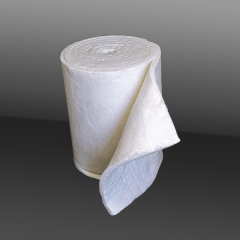
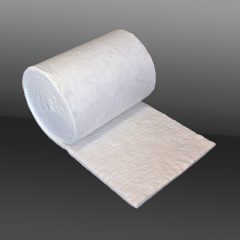
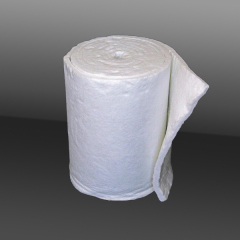
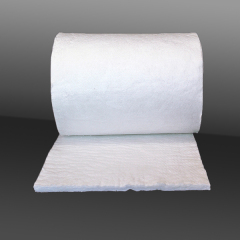
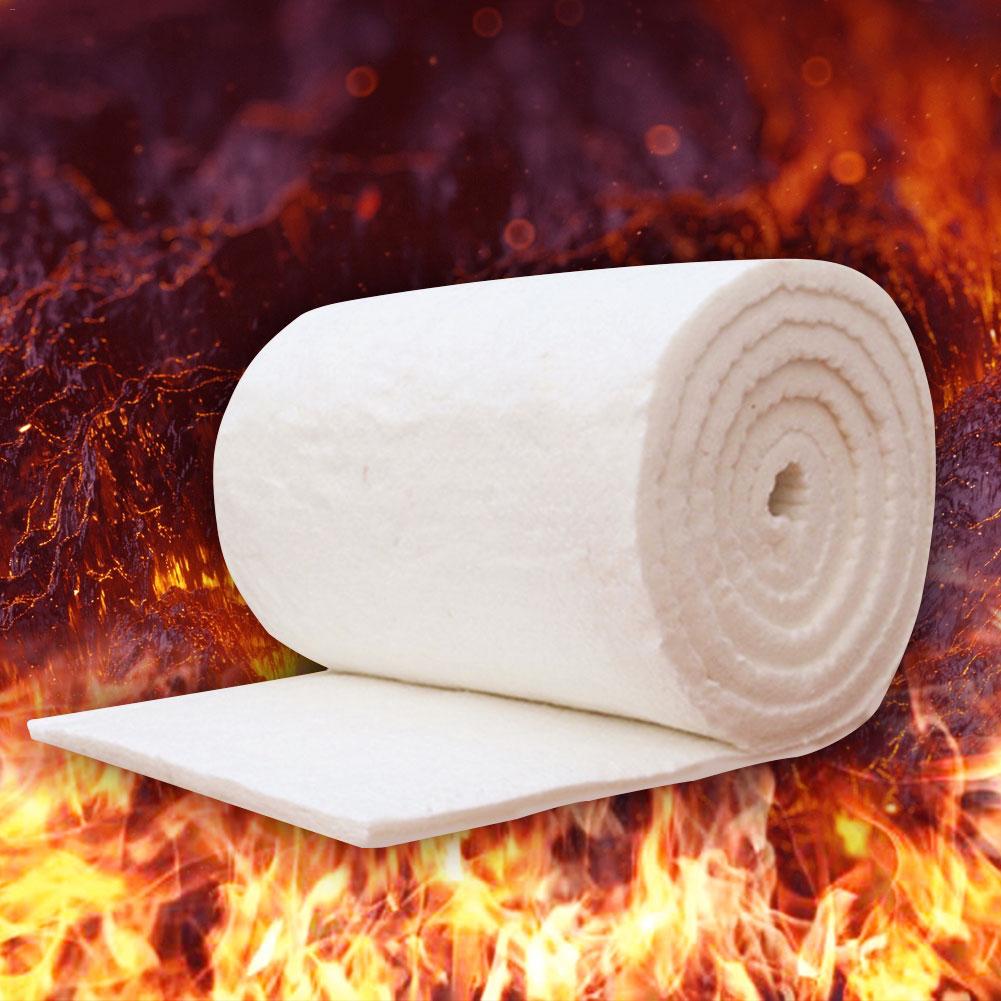
Ceramic fiber blanket is a lightweight, low thermal conductivity, high-temperature-resistant insulation material with excellent mechanical flexibility and thermal insulation performance. It is widely used in high-temperature equipment for thermal insulation and energy saving. Applications cover metallurgy, chemical industry, power generation, building materials, and aerospace. It is particularly suitable for equipment linings, high-temperature sealing, and energy recovery systems.
2. Product Features
ü Excellent high-temperature performance: Long-term service temperature ranges from 1260℃ to 1430℃, with short-term resistance to even higher temperatures. Stable performance at high temperatures, resistant to pulverization, with no deterioration of mechanical strength.
ü Lightweight and low density: Density between 128–320 kg/m³, lightweight to reduce equipment load, making construction and installation easier.
ü Low thermal conductivity, significant energy saving: Thermal conductivity as low as 0.12 W/m·K (at room temperature), effectively reducing heat loss and improving energy efficiency.
ü Outstanding thermal shock resistance: Excellent resistance to rapid temperature changes, not prone to cracking or delamination.
ü Good flexibility and workability: Easy to cut and fold, suitable for wrapping complex shapes and providing thermal protection for irregular structures.
ü Environmentally friendly and safe: Asbestos-free, free of hazardous substances, compliant with multiple international environmental standards, safe and harmless in use.
3. Technical Parameters
|
Item |
STD |
HP |
HA |
ZA |
HTZ |
|
Classification Temperature (℃) |
1260 (2300°F) |
1260 (2300°F) |
1360 (2480°F) |
1360 (2480°F) |
1430 (2600°F) |
|
Working Temperature (℃) |
≤1050 |
≤1100 |
≤1200 |
≤1200 |
≤1350 |
|
Color |
Pure White |
Pure White |
Pure White |
Pure White |
Pure White |
|
Bulk Density (kg/m³) |
64–160 |
64–160 |
96–160 |
96–160 |
96–160 |
|
Permanent Linear Shrinkage (%) |
1000℃×24h ≤ -3 |
1100℃×24h ≤ -3 |
1200℃×24h ≤ -3 |
1350℃×24h ≤ -3 |
|
|
Thermal Conductivity (W/m·K) |
400℃: 0.095 |
500℃: 0.123 |
600℃: 0.158 |
… |
|
|
Tensile Strength (MPa) |
0.04–0.06 |
0.05–0.075 |
0.05–0.075 |
0.05–0.075 |
0.05–0.075 |
|
Chemical Composition (%) |
Al₂O₃: 45–55 |
Al₂O₃+SiO₂ ≥97–99 |
ZrO₂: 5–17 |
Fe₂O₃ ≤0.2–1.0 |
Na₂O+K₂O ≤0.5 |
|
Size (mm) |
Length: 3600 / 7200 / 14640 |
||||
|
Packing |
Plastic woven bags & cartons |
||||
|
Certification |
CE, ISO9001:2008, ISO14001:2004, SGS, ROHS, SASO, REACH |
||||
4. Production Process
Ø Raw Material Melting: High-purity alumina and silica are melted in a furnace at around 1800℃.
Ø Fiber Formation: Molten liquid is fiberized by centrifugation, forming fibers with diameters of 2–5 µm.
Ø Needling Process: Fibers are needled into blankets with uniform thickness and density.
Ø Curing & Cutting: Blankets are stabilized and cut into customized sizes.
Ø Water Repellent Treatment (Optional): Improves moisture resistance and extends service life.
5. Product Types and Specifications
|
Type |
Features |
Typical Applications |
|
Standard Blanket |
Cost-effective, general insulation |
Furnace linings, equipment wrapping |
|
High-Temperature Blanket |
Resistance up to 1430℃ |
High-temp kilns, smelting furnaces |
|
Hydrophobic Blanket |
Excellent moisture resistance |
External wall insulation, humid environments |
|
Composite Blanket |
Laminated with foil or fiberglass cloth for durability |
Sandwich panels, pipeline insulation |

6. Applications
▶Steel & Metallurgy: Furnace linings, furnace door seals, hot blast stoves.
▶Chemical Industry: Reactors, heat exchangers, pipeline insulation.
▶Power Industry: Boiler linings, flue insulation, heat recovery systems.
▶Ceramics & Glass: Kiln insulation, cooling equipment.
▶Aerospace: Engine thermal insulation, test equipment.
▶Building Energy Saving: Insulation filler in high-temperature panels.
7. Installation & Construction
✅ Easy cutting: Can be cut with scissors or special tools.
✅ Excellent wrapping performance: Flexible for complex shapes, minimizing gaps.
✅ Multiple fixing methods: Mechanical anchors, adhesives, or wire mesh.
✅ Safety recommendations: Wear dust masks and gloves to avoid fiber dust inhalation.
8. Packaging & Storage
Packed in PE vacuum-sealed plastic film, moisture-proof and dust-proof.
Store in dry, ventilated areas, avoid direct sunlight and mechanical damage.
Avoid moisture during long-term storage to maintain performance.
9. Advantages vs. Traditional Materials
|
Comparison |
Ceramic Fiber Blanket |
Traditional Insulation |
|
Max. Service Temp. |
1260–1430℃ |
Typically <650℃ |
|
Weight |
Lightweight (128–320 kg/m³) |
High-density boards |
|
Environmental Safety |
Asbestos-free, low dust |
May contain asbestos |
|
Installation Flexibility |
Flexible, easy cutting |
Rigid, difficult to shape |
|
Thermal Stability |
Excellent, shock-resistant |
Prone to cracking, powdering |
10. FAQ
Q1: What is the maximum service temperature?
A1: 1260–1430℃, depending on model and density.
Q2: Does it generate dust?
A2: Contains minimal fiber dust. Protective mask and gloves are recommended during installation.
Q3: What environments suit hydrophobic blankets?
A3: Ideal for humid areas or external wall insulation.
Q4: Can it be made into composite materials?
A4: Yes, with aluminum foil or fiberglass cloth for improved durability.
Q5: How to choose the right density and thickness?
A5: Selection depends on service temperature, insulation needs, and mechanical strength requirements. Our technical team can provide guidance.

11. Customer Cases
Case 1: Steel Plant Furnace Lining Upgrade
High-temperature ceramic fiber blanket replaced refractory bricks, reducing furnace weight, improving efficiency by 10%, and extending maintenance cycles.
Case 2: Glass Manufacturing Kiln Insulation
Hydrophobic blanket used to prevent moisture erosion, ensuring stable long-term operation, reducing heat loss by 15%, and lowering fuel consumption.
12. Service & Support
Customized sizes and specifications.
Professional technical support for product selection and construction solutions.
Comprehensive after-sales service.
Sample supply for quality testing.
✨ Ceramic fiber blanket, with its excellent high-temperature performance, lightweight flexibility, and environmental safety, has become a premium solution in modern thermal insulation. Whether for industrial kilns, thermal equipment, or building energy saving, it delivers outstanding energy efficiency and operational safety.