










Description
Review
Description
1. Product Overview
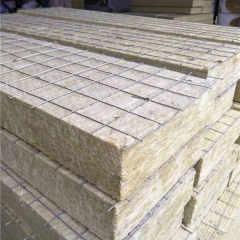
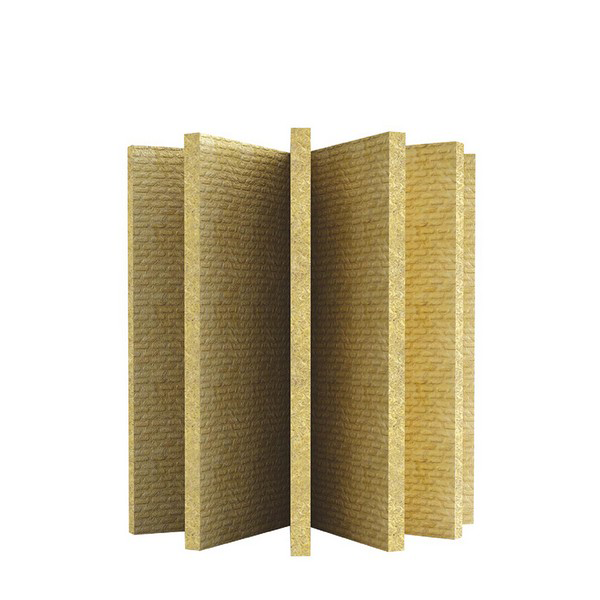
Rock wool board core material is manufactured using natural basalt, which is melted at high temperature, fiberized by centrifugation, and formed into boards through pressing. It is a high-performance inorganic fiber insulation material with excellent thermal insulation, fire resistance, sound absorption, and corrosion resistance.
It is widely used in buildings, industrial equipment, and transportation, serving as an essential material for green and energy-efficient buildings.
Its dense and porous fiber structure forms numerous air layers, effectively blocking heat transfer and helping maintain stable indoor temperatures. As a non-combustible material, rock wool boards play an important role in fire safety, protecting both buildings and occupants. Additionally, their eco-friendly, non-toxic, and durable characteristics fully meet modern green building standards.
2. Product Performance Advantages
① Excellent Thermal Performance
Thermal conductivity as low as 0.034 W/(m·K), far superior to traditional foam plastics and glass wool.
Porous fiber structure forms air layers, effectively blocking heat transfer.
Stable insulation performance, suitable for a wide temperature range from -200℃ to 700℃.
② Outstanding Fire Safety
Classified as Class A non-combustible material, with fire resistance exceeding 700℃.
In case of fire, it does not burn or release toxic gases, ensuring maximum building safety.
Suitable for high-rise buildings, subways, tunnels, ships, and other fire-protection-critical applications.
③ Excellent Sound Absorption
Porous structure absorbs sound waves and effectively reduces noise transmission.
Ideal for hospitals, schools, office buildings, and industrial plants requiring quiet environments.
④ Mechanical Strength and Durability
Optimized pressing process ensures high compressive strength and stable mechanical performance.
Non-water-absorbing, non-corrosive, mold-resistant, with a service life of over 30 years.
Resistant to freeze-thaw cycles and weather changes, adaptable to harsh environments.
⑤ Eco-Friendly and Healthy
Free of formaldehyde and VOCs, meeting international green building standards.
Recyclable, with minimal environmental impact during production and disposal.
3. Technical Parameters
|
Characteristics |
Unit |
Lamella Core Material |
Rock Wool Core Board |
Standard Test |
|
Compressive strength of lamella (parallel to fiber direction) |
kPa |
≥60 |
— |
GB/T 25975 |
|
Tensile strength of lamella (parallel to fiber direction) |
kPa |
≥100 |
— |
GB/T 25975 |
|
Slag ball content |
% |
<5 (coarse >0.25mm), <30 (fine >63µm) |
— |
GB/T 25975 |
|
Thermal conductivity of rock wool board (20℃) |
W/m·K |
≤0.040 |
— |
GB/T 10295 |
|
Thermal conductivity of lamella (25℃) |
W/m·K |
≤0.046 |
— |
GB/T 10295 |
|
Combustion performance |
— |
Non-combustible material |
— |
GB/T 5464-1999 |
|
Fire reaction class |
— |
A1 |
— |
GB/T 8624-2006 |
|
Fire resistance limit |
h |
Varies from 1–2h depending on panel structure & thickness |
GB/T 9978 |
|
|
Moisture absorption |
% |
<1 |
— |
GB/T 5480.7 |
|
Dimensional stability after aging |
% |
≤5 |
— |
PREN 14509 |
|
Melting temperature |
℃ |
>1000 |
— |
— |
Note: For more detailed technical specifications, please contact our sales manager.
4. Main Application Areas
Ø Building Exterior Wall Insulation: Enhances energy efficiency by reducing heat exchange, lowers energy consumption, and ensures fire safety.
Ø Roof and Floor Insulation: Blocks solar radiation, reduces roof heat load, prevents heat loss, and extends structural lifespan.
Ø Industrial Equipment and Pipeline Insulation: Applied in steam pipelines, kilns, and cooling systems to minimize heat loss and improve energy efficiency.
Ø Sound Insulation and Noise Reduction: Used in walls and ceilings to improve indoor acoustic comfort, suitable for offices, hospitals, and schools.
Ø Transportation: Applied in ships, subways, and high-speed trains for thermal insulation and fire protection.
5. Production Process
ü Raw Material Preparation: High-quality basalt is crushed and screened.
ü High-Temperature Melting and Fiberizing: Basalt is melted at ~1600–1800℃ and fiberized by centrifugation.
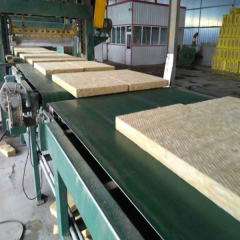
ü Forming and Pressing: Fibers are collected into mats, pressed into boards with controlled thickness and density.
ü Heat Treatment and Curing: Boards are cured in drying kilns for strength and stability.
ü Cutting and Packaging: Final products are cut to customer specifications, inspected, and packaged.
6. Installation Guide
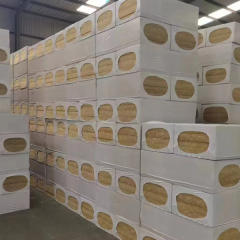
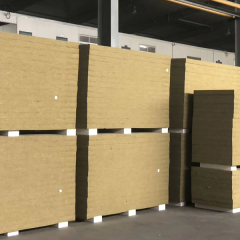
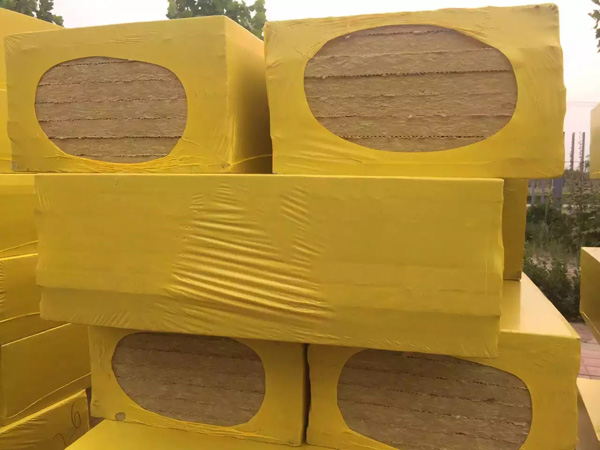
▶Storage & Handling: Store in a dry, ventilated environment, avoid rain/moisture, and stack neatly.
▶Installation & Fixing: Use specialized anchors and adhesives. Avoid installation in strong winds or rain. Cut with sharp tools and wear protective gear.
▶Protection Measures: Cover with protective layers after installation to avoid mechanical damage or UV exposure. Keep the site clean to reduce dust inhalation.
7. Standards & Certifications
Complies with GB/T 5480, GB/T 11835 national standards.
ISO9001 Quality Management System certified.
CE certified, meeting EU building material safety standards.
Meets green building rating system requirements (LEED, BREEAM).
8. Market Trends & Technological Innovations
ü Sustainability: Growing demand due to stricter climate policies and building energy efficiency standards.
ü Technological Upgrades: High-density boards for mechanical load, nanotechnology to enhance insulation efficiency and durability.
ü Automation & Smart Manufacturing: IoT and digital monitoring ensure real-time process control, product stability, and high-end market demand.
9. FAQ
Q1: What types of buildings are suitable for rock wool board core material?
A1: It is suitable for residential, commercial, industrial, high-rise, public facilities, and transportation applications.
A1: It is suitable for residential, commercial, industrial, high-rise, public facilities, and transportation applications.
Q2: How is its waterproof performance?
A2: Rock wool has low water absorption, but in humid areas, it is recommended to use it together with a waterproof layer to prevent performance loss.
A2: Rock wool has low water absorption, but in humid areas, it is recommended to use it together with a waterproof layer to prevent performance loss.
Review
Review
Send your message to us

