










1. Product introduction
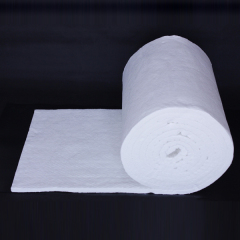
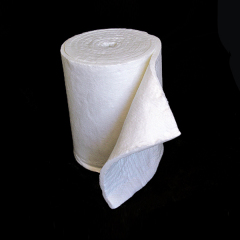
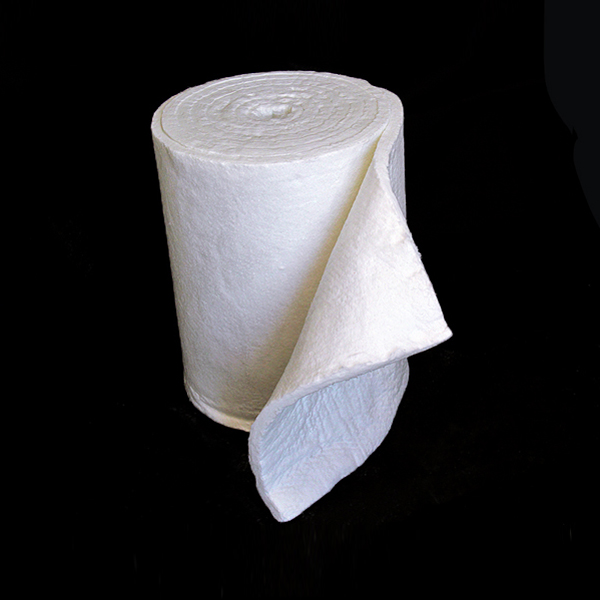
Ceramic fiber blankets possess characteristics such as low heat capacity, low heat conductivity, excellent high-temperature tolerance, seismic resistance, tensile strength, and sound absorption. They are important materials for insulation and heat preservation in industrial high-temperature equipment. Ceramic fiber blankets are widely used in thermal engineering and backup systems in industries such as chemical, metallurgy, ceramics, and machinery. They are particularly suitable for high-temperature sealing and heat energy recovery systems, and come in various thicknesses, widths, and densities for selection.
2. Product feature
ü Superior high-temperature tolerance
The ceramic fiber blanket can withstand temperatures ranging from 1260℃ to 1430℃ for a long time, and can withstand even higher temperatures for a short period. It maintains stable performance at high temperatures, does not burn when exposed to fire, is not prone to powdering, and can provide fireproof and heat insulation protection.
ü Low density and light weight
The density is usually 128-320 kg/m³. Under the same volume, it is lighter in weight, which can effectively reduce the burden on equipment and facilitate construction. It has a small heat capacity, a low thermal conductivity, and good insulation. The thermal conductivity can be as low as 0.12 W/m·K at room temperature, effectively reducing heat loss. It has good thermal stability and can effectively achieve heat insulation and preservation.
ü Excellent thermal shock stability
The ceramic fiber blanket has excellent heat shock resistance and is unlikely to crack or peel off in alternating cold and hot environments.
ü Good tensile strength and flexibility
The fabric is tightly woven and can be cut, sewn, folded, and even wrapped around irregularly shaped equipment as required, making it suitable for thermal protection in complex structures
ü Environmentally friendly and safe
Free of harmful substances, in compliance with environmental regulations of multiple countries, and safe to use without any harm.
ü Sound absorption and noise reduction
Closed-cell structure makes the indoor environment comfortable and quiet.
3. Product type
|
Product type |
Product features |
|
Ordinary ceramic fiber blanket |
Basic type, applicable temperature range is generally 1050° - 1260°. |
|
High-temperature blanket |
The temperature resistance can reach 1430 - 1500℃. It is made of high-temperature aluminum or alloy type, with high tensile strength. |
|
Hydrophobic ceramic fiber blanket |
In addition to the basic processes, a waterproof treatment procedure has been added. The moisture-proof and waterproof performance is excellent, suitable for humid and hot environments, with a hydrophobicity rate of over 98%. |
|
Composite ceramic fiber blanket |
The applicable temperature depends on the material grade of the ceramic fiber blanket base material. When coated with aluminum foil, glass fiber cloth, etc., it further enhances the effects of heat insulation, waterproofing, dustproofing, and surface strength. |
4. Application fields
l Industrial smelting: Inner lining of high-temperature kilns, insulation of hot blast stoves for heat treatment equipment, covering and insulation of steel ladles and molten iron tanks
l Chemical industry: Insulation of high-temperature pipelines, heat exchange equipment, inner lining of chimneys
l Power industry: Inner lining of boilers, insulation of flues, heat recovery systems
l Ceramics and glass manufacturing: Insulation of high-temperature kilns, tunnel kilns, glass melting furnaces
l Aerospace and aviation: Engine insulation, thermal protection of spacecraft
l Building energy conservation: Filling materials for high-temperature insulation boards, fireproof materials
5.Technical Specifications
|
Type |
STD |
HP |
HA |
ZA) |
HTZ |
||
|
Fire resistance temperature (℃) |
1260 |
1260 |
1360 |
1360 |
1430 |
||
|
Service temperature (℃) |
≤1050 |
≤1100 |
≤1200 |
≤1200 |
≤1350 |
||
|
Color |
Pure white |
Pure white |
Pure white |
Pure white |
Pure white |
||
|
Volume density (Кг/м3) |
64-160 |
64-160 |
96-160 |
96-160 |
96-160 |
||
|
Constant linear change (%) |
1000℃X24h≤ -3 |
1100℃X24h≤ -3 |
1200℃X24h≤ -3 |
1350℃X24h≤ -3 |
|||
|
Thermal conductivity (вт/м.к) |
400C |
0.095 |
0.095 |
0.114 |
0.114 |
0.122 |
|
|
500C |
0.123 |
0.123 |
0.135 |
0.135 |
0.153 |
||
|
600C |
0.158 |
0.158 |
0.191 |
0.191 |
0.184 |
||
|
Tensile strength (Мпа) |
0.04-0.06 |
0.05-0.075 |
0.05-0.075 |
0.05-0.075 |
0.05-0.075 |
||
|
Chemical composition (%) |
AL2O3 |
45-46 |
47-49 |
52-55 |
45-46 |
39-40 |
|
|
AL2O3+SIO2 |
97 |
99 |
99 |
- |
- |
||
|
AL2O3+SIO2+ZrO2 |
- |
- |
- |
99 |
99 |
||
|
ZrO2 |
- |
- |
- |
5-7 |
15-17 |
||
|
Fe2O3 |
≤1.0 |
≤0.2 |
≤0.2 |
≤0.2 |
≤0.2 |
||
|
Na2O+K2O |
≤0.5 |
≤0.2 |
≤0.2 |
≤0.2 |
≤0.2 |
||
|
Size specification (mm |
Length: 3600 & 7200 & 14640 Width: 610 & 1220 Thickness: 6-60; According to the customer's requirements. |
||||||
|
包装 |
Plastic weaving bags and cardboard boxes |
||||||
|
Certificates |
CE,ISO9001-2008; ISO14001-2004,SGS, ROHS,SASO, REACH |
||||||
Note: for more information about other product specifications, please consult our sales manager.
6.Production process
ü Melting of raw materials
Mix high-purity raw materials, such as alumina and silica, in a high-temperature furnace and melt them at a temperature of 1800°C.
ü Fiber formation
Use a spinneret to centrifuge the molten liquid at high temperature and high speed, causing it to spin into thin fibers and solidify, with the fiber diameter ranging from 2 to 5 µm.
ü Needle-punching into a mat
Send the bulk fiber filaments into a needle-punching machine for needle-punching. This causes the fiber layers to be closely interwoven to form a dense fiber mat, enhancing the tensile strength and wind erosion resistance of the fiber mat.
ü Drying and curing as well as cutting
Heat treat at 550-750°C for 10-30 minutes, stabilize the fiber structure, then undergo thermal contraction, repair any fiber damage, and finally cut into the desired size and thickness.
ü Hydrophobic treatment (optional)
Perform waterproof treatment on some products to improve moisture absorption performance and service life.
7.Comparison of advantages
|
Comparison item |
Ceramic fiber blanket |
Traditional insulation material |
|
Maximum operating temperature |
ong-term operating temperature ranges from 1000℃ to 1400℃, and can be higher for short periods. Better high-temperature stability. |
Most are below 650℃. |
|
Light weight and low density |
28 - 320 kg/m³, the weight is only 1/10 of that of traditional fireproof bricks. |
Mostly made of high-density boards, they usually have higher hardness and poorer flexibility. |
|
Environmental performance |
No asbestos, low dust and other harmful substances, no binder, no smoke or volatiles at high temperatures. |
Some contain asbestos or harmful substances. Some traditional materials may contain organic binders, which can produce harmful gases easily at high temperatures. |
|
Construction flexibility |
Easy to cut, can wrap complex equipment, and installation is convenient. |
High rigidity, difficult to process |
|
Insulation effect |
Low thermal conductivity, thinner thickness can achieve the same insulation effect. |
More thickness is required for the same insulation effect, and more raw materials are consumed. |
|
Thermal stability |
Resistant to rapid cooling and heating, resistant to thermal shock, less prone to cracking or powdering. |
Prone to cracking or powdering. |
8. Packaging and Storage
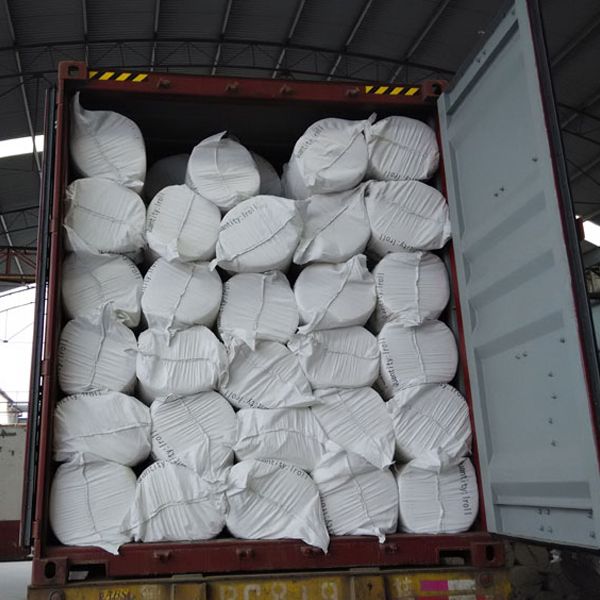
The product is vacuum-packed with PE plastic film to prevent moisture and dust, ensuring product quality.
The storage environment should be kept dry and well-ventilated to prevent the material from getting damp. Otherwise, it will affect the performance and service life.
Avoid high temperatures and direct sunlight exposure. Try to keep it in a cool environment. 、
It is strictly prohibited to store together with corrosive chemicals to avoid material failure.
9. Construction and Installation
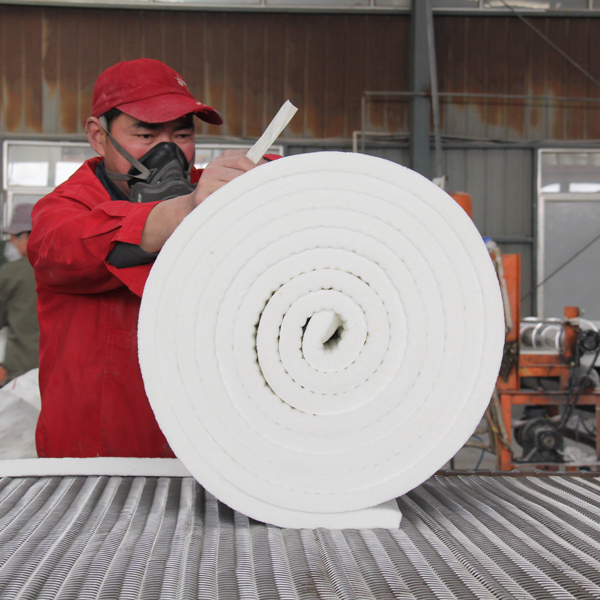
(1) Surface Treatment: Before the actual construction, thoroughly clean the old insulation materials on the surface of the equipment to be wrapped.
(2) Convenient Cutting: Use scissors or special tools to cut according to the designed size. Do not tear directly.
(3) Wrapping and Joining: The blanket is soft, making it easy to closely wrap the equipment with complex shapes, reducing gaps and keeping them within 5 millimeters as much as possible.
(4) Multiple Fixation Methods: Mechanical anchoring, adhesives, metal mesh covers, or tying can be used for fixation.
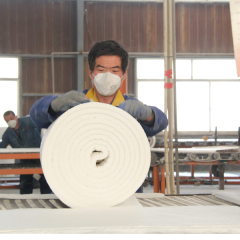
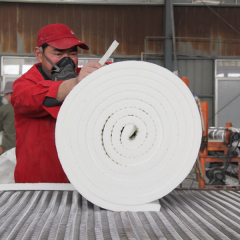
(5) Protection Suggestions: During construction, it is recommended to wear dust masks and gloves to avoid inhaling fiber dust. Do not step on or crush the ceramic fiber blanket with heavy objects. Avoid wetting the material with rain or other water sources.
10. Customer Cases
Case One: Transformation of High-Temperature Ceramic Kiln Furnace in a Glass Manufacturing Plant
By replacing traditional silicagelatinous cotton with high-temperature ceramic fiber blankets, the weight of the furnace lining was significantly reduced, the thermal efficiency of the furnace was increased by 15%, and the maintenance cycle was shortened.
Case Two: Thermal Exhaust Furnace Insulation Coating in a Factory
The use of composite blankets enhanced insulation, dust prevention, and surface strength, ensuring long-term stable operation, significantly extending the service life, reducing heat loss by 20%, and saving fuel consumption.
11.FAQ
Q1: What is the maximum temperature resistance of the ceramic fiber blanket?
A1: For the basic type, the applicable temperature range is generally 1050° - 1260°. For the high-temperature type, it ranges from 1430°C to 1500°C, depending on the product model and density.
Q2: Will the ceramic fiber blanket produce dust? What precautions should be taken during construction?
A2: The fiber blanket itself contains a small amount of fiber dust. It is recommended to wear a dust mask and gloves during construction to avoid inhaling or direct skin contact.
Q3: For which environments is the hydrophobic ceramic fiber blanket suitable?
A3: The hydrophobic product has excellent moisture-proof performance and is suitable for use in damp environments such as underground pipelines, ships, etc. for insulation and heat preservation or external wall insulation.
Q4: Can ceramic fiber blankets be made into composite materials?
A4: Yes, common types include aluminum foil coating, glass fiber fabric, etc. Composite layers are added with zirconia or chromium oxide to enhance durability and insulation performance.
Q5: What are the key advantages?
A5: High temperature resistance, excellent insulation and heat insulation properties, stable chemical performance, lightweight, good thermal stability and seismic resistance, and it complies with national non-combustible material standards.
Q6: How to choose the type based on requirements?
A6: You can make a selection based on the long-term usage temperature, usage environment, budget, etc. For example, for ordinary pipeline insulation, the standard type can be chosen; for those exposed to high-speed airflow, it is recommended to select the spun yarn blanket with higher tensile strength. No matter what your requirements are, we can provide professional selection suggestions.

12.Services and Support
Offer professional services, with customizable sizes and specifications to meet the needs of different customers.
Have a professional technical team and front-line staff to provide the most perfect and suitable product selection and construction plan design.
Have a detailed and complete after-sales service system, always available online to ensure that customer problems are resolved promptly and they can use the product without worries.
Have a rich and complete range of samples for customers to test, to maximize the guarantee of customers' requirements and considerations for the product, and ensure that the applicability and quality perfectly meet the customer standards.
If you need more information, please contact us. Together, let's promote the development of the energy conservation and environmental protection cause.

