


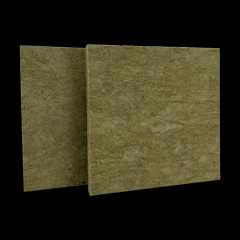


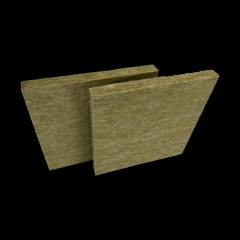


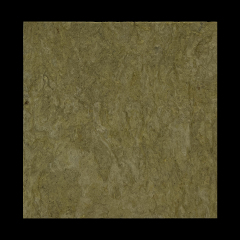




1. Product Overview
With excellent thermal insulation, fire resistance, sound absorption, and corrosion resistance properties, rock wool board is widely used in building energy efficiency, industrial equipment insulation, petrochemical, metallurgy, power generation, shipbuilding, transportation, and other fields.
As a representative product of modern high-temperature insulation materials, rock wool board not only provides excellent thermal physical properties but also meets strict environmental protection standards. It is an ideal choice for high-temperature insulation, energy consumption reduction, and improved safety protection.
2. Core Product Features
■ Excellent Fire Resistance
Rock wool board is a non-combustible material (Class A1). It can withstand high temperatures in fire conditions, prevent the spread of fire, and protect buildings and equipment safety.
■ Excellent Thermal Insulation Performance
With low thermal conductivity (0.034-0.045 W/m·K), rock wool board maintains stable thermal resistance under high-temperature conditions and effectively reduces energy loss.
■ Good Mechanical Strength
It features high compressive strength and good toughness, is not easy to break during installation and transportation, and is convenient for cutting and installation.
■ Sound Absorption and Noise Reduction
The fiber structure can absorb sound waves, reduce industrial noise and indoor echo, and improve environmental comfort.
■ Moisture Resistance and Corrosion Resistance
Some rock wool boards can be covered with films, aluminum foil, or polymer waterproof layers to improve moisture resistance and adapt to various complex environments.
■ Environmentally Friendly and Non-Toxic
Free of asbestos, compliant with RoHS and REACH environmental standards, safe for humans and the environment without harmful emissions.
3. Technical Parameters
| Item | Unit | Parameter |
| Product Name | — | Rock Wool Board |
| Density | kg/m³ | 60 / 80 / 100 / 120 (Customizable) |
| Thermal Conductivity | W/m·K | 0.034~0.045 |
| Compressive Strength | kPa | ≥80 (at 10% compression deformation) |
| Water Absorption | % | ≤1.0 |
| Working Temperature | ℃ | ≤700 |
| Combustion Performance | — | Non-combustible (Class A1) |
| Size | mm | 600×1200×20-100 (Customizable) |
| Environmental Certification | — | RoHS, REACH |
4. Specifications and Packaging
✅ Thickness Range: 20-100mm
✅ Standard Size: 600×1200mm, length and width can be customized according to requirements.
✅ Packaging Method: Cartons, woven bags, or pallet packaging with moisture and compression protection.
✅ Surface Treatment: Aluminum foil, galvanized steel sheet, or waterproof coating can be added to meet different application environments.

5. Application Fields
(1) Exterior Wall Insulation
Rock wool board is widely used for insulation and fire protection layers of high-rise buildings, industrial plants, cold storage facilities, and residential exterior walls, improving energy efficiency and safety.
(2) Roof and Sandwich Panels
Used as thermal insulation materials for roof insulation panels and sandwich panel cores, improving fire resistance and thermal insulation performance.
(3) Industrial Equipment Insulation
Suitable for thermal protection of boilers, steam pipelines, high-temperature storage tanks, reactors, and pipe supports.
(4) Petrochemical and Metallurgical Industries
Used for thermal insulation of furnaces, pipelines, storage tanks, and high-temperature reaction equipment, featuring high temperature resistance, corrosion resistance, and thermal shock resistance.
(5) Transportation Field
Used as fireproof insulation and sound absorption materials for ships, subways, tunnels, and other transportation facilities.
6. Construction and Installation Guide
★ Construction Environment Requirements
Keep the working environment dry, clean, and well ventilated. Avoid moisture absorption or damage to the boards.
★ Installation Methods
Mechanical fixing (bolts, hooks), adhesive fixing, or composite fixing methods can be used. Suitable for walls, roofs, and external surfaces of equipment.
★ Cutting and Processing
Can be cut with saws, cutting knives, or special tools to ensure dimensional accuracy.
★ Safety Protection
Workers are recommended to wear gloves, masks, and protective goggles to avoid inhaling fiber dust.
★ Storage and Handling
Store in a dry and ventilated place. Avoid direct sunlight and heavy pressure. Handle carefully during transportation.
7. Comparison of Rock Wool Board Advantages
| Feature | Rock Wool Board | Traditional Insulation Materials |
| Fire Resistance | Non-combustible Class A1 | Combustible or difficult-to-combust Class B |
| Thermal Insulation Performance | Low thermal conductivity | Relatively higher thermal conductivity |
| Sound Absorption and Noise Reduction | Excellent | General |
| Environmental Performance | RoHS/REACH compliant | Some may contain asbestos or chemical additives |
| Mechanical Strength | High | Easy to break |
| Cost | Medium | Low |
| Cost Performance | High | Medium |
8. Quality Control and Testing
- Raw Material Inspection: Ensures mineral purity and uniform composition.
- Physical Performance Testing: Density, thermal conductivity, and compressive strength testing.
- Fire Performance Testing: Combustion classification and fire resistance limit testing.
- Environmental Testing: RoHS and REACH compliance testing.
- Dimension and Appearance Inspection: Ensures flat surface and no cracks on the boards.
9. Packaging and Transportation
Packaging Method:
Roll or flat board pallet packaging with external moisture-proof film protection.
Transportation Recommendations:
Full pallet transportation is recommended to avoid damage caused by compression.
Storage Conditions:
-10℃~40℃, avoid rain exposure and heavy pressure.
10. Service and Support
Sample Supply:
Free samples are available for testing and installation demonstration.
Technical Support:
Provide product selection recommendations, installation guidance, and energy-saving evaluation.
Customization Service:
Dimensions, density, surface treatment, and composite materials can be customized according to requirements.
After-Sales Support:
Quality issues can be handled through return or replacement services, with technical solutions provided.

11. FAQ
Q1: What is the difference between rock wool board and glass wool board?
A1: Rock wool board is made from natural minerals such as basalt and diabase. It has better fire resistance, higher compressive strength, and is suitable for high-temperature industrial applications and building fire protection requirements. Glass wool board is mainly used for indoor thermal insulation and sound absorption, with relatively lower temperature resistance.
Q2: Can rock wool board be used outdoors?
A2: Yes. However, it is recommended to choose rock wool board with waterproof film or aluminum foil facing to improve moisture resistance and extend service life.
Q3: Is rock wool board environmentally friendly?
A3: Yes. Rock wool board is asbestos-free, has no carcinogenic risk, and complies with RoHS and REACH environmental standards, making it safe for use.
Q4: Is rock wool board difficult to install?
A4: No. Installation is simple. It can be cut according to requirements and supports mechanical fixing or adhesive installation. Proper protective measures should be taken during construction.
Q5: Can the thickness and density of rock wool board be customized?
A5: Yes. We provide customized solutions for different thicknesses, densities, and surface treatments with composite materials according to customer requirements.

