










1. Product Overview
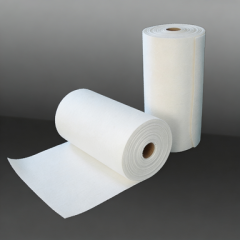
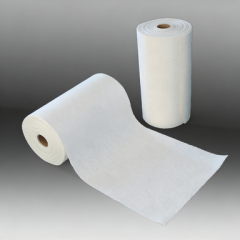
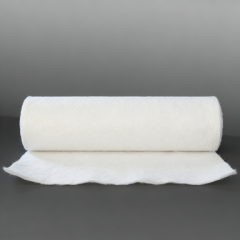
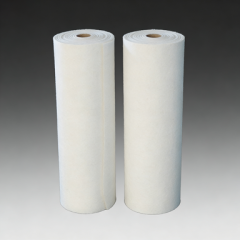
Polycrystalline mullite ceramic fiber paper is a high-performance flexible refractory insulation material made from high-purity alumina (Al₂O₃) through high-temperature melting, fiberizing, vacuum forming, and crystallization processes. Through crystallization, a stable polycrystalline mullite structure is formed, enabling the material to maintain excellent physical stability and chemical inertness even under extreme high-temperature conditions.
This product is specially designed for high-temperature sealing and precision insulation applications. It combines lightweight, flexibility, and high temperature resistance. The maximum continuous operating temperature can reach up to 1600°C, making it a significant upgrade over conventional ceramic fiber paper.
2. Material Structure and Working Principle
Polycrystalline fiber paper consists of ultra-fine and uniformly distributed ceramic fibers, forming a stable porous network structure. Air is trapped within the micropores, effectively blocking heat conduction and convection paths, thus achieving excellent thermal insulation performance.
After high-temperature crystallization, a mullite crystal phase is formed inside the fibers, significantly improving high-temperature stability and shrinkage resistance. Even under long-term high temperature or frequent thermal cycling, the material maintains structural integrity without powdering or deformation.
3. Key Features
(1)Ultra-high temperature resistance
Continuous working temperature up to 1600°C, with higher short-term tolerance.
(2)Low thermal conductivity
Maintains excellent insulation performance at high temperatures, reducing heat loss.
(3)Excellent thermal shock resistance
Suitable for frequent start-stop operations or rapid temperature changes.
(4)High flexibility
Bendable and foldable, adaptable to complex installation structures.
(5)High purity and chemical stability
Resistant to acids and alkalis, suitable for harsh industrial environments.
(6)Inorganic and environmentally friendly
Asbestos-free, smoke-free, odorless, compliant with RoHS and REACH standards.
4. Technical Parameters
| Item | Unit | Value |
| Working Temperature | °C | ≤1600 |
| Density | kg/m³ | 180–220 |
| Thickness | mm | 0.5–5 |
| Thermal Conductivity | W/m·K | 0.12 (600°C) |
| Shrinkage | % | ≤1.5 |
| Chemical Composition | % | Al₂O₃ ≥72% |
| Combustibility | — | Non-combustible |
5. Specifications & Customization
Standard width: 610mm / 1220mm
Length: Supplied in rolls (customizable)
Thickness range: 0.5–5mm
Density: Customizable
Surface treatment: Aluminum foil, fiberglass cloth lamination available
Supports die-cutting and custom shapes
6. Typical Applications
(1) Industrial furnace systems
Used for door sealing, gap filling, and insulation layers.
(2) High-temperature sealing and gaskets
Widely used for gaskets, flange sealing, etc.
(3) Equipment thermal protection
For pipelines, equipment shells, and hot surface protection.
(4) Metallurgical and petrochemical industries
Used in reactors, heat treatment equipment, etc.
(5) New energy sector
Suitable for battery thermal management and high-temperature component protection.
7. Installation Guidelines
The product can be cut into any shape as required and installed by bonding, wrapping, or mechanical fixing.
Protective gloves and masks are recommended during installation to avoid fiber dust inhalation. For dynamic hot-face applications, additional support structures are recommended to extend service life.
8. Product Comparison
| Item | Polycrystalline Fiber Paper | Standard Ceramic Fiber Paper |
| Temperature Resistance | 1600°C | 1260°C |
| Stability | High | Medium |
| Shrinkage | Low | Higher |
| Service Life | Long | Medium |
9. Quality Control System
Strict quality control is implemented throughout production:
✅ Raw material purity testing
✅ Fiber structure analysis
✅ Thermal conductivity testing
✅ High-temperature stability testing
✅ Environmental compliance testing
10. Packaging & Storage
Roll packaging with waterproof film
Pallet or carton transportation available
Store in dry and ventilated conditions
11. Technical Service & Support
Free sample testing
Technical selection guidance
Customized solutions
After-sales technical support
12. FAQ
Q1: What is the difference from standard ceramic fiber paper?
A1: The polycrystalline mullite structure provides significantly higher temperature resistance (up to 1600°C), better thermal stability, and longer service life compared to conventional ceramic fiber paper, which typically operates below 1260°C.
Q2: Can it be used for gaskets and sealing applications?
A2: Yes, due to its flexibility and high-temperature resistance, it is ideal for manufacturing gaskets, seals, and thermal barriers in industrial equipment.
Q3: Is customization available?
A3: Yes, we support customization in thickness, width, length, density, and composite layers such as aluminum foil or fiberglass.

