










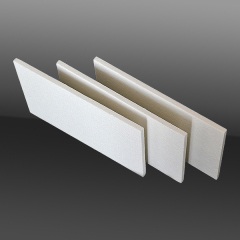


1. Product Overview
2. Structure and Working Principle
3. Key Features
-
(1) Ultra-high temperature resistance up to 1600°C
-
(2) Excellent thermal stability
-
(3) Low thermal conductivity
-
(4) Strong thermal shock resistance
-
(5) High mechanical strength
-
(6) Chemical corrosion resistance
-
(7) Easy machining and processing
-
(8) Environmentally friendly and asbestos-free
4. Technical Parameters
| Item | Unit | Value |
| Max Working Temp | °C | ≤1600 |
| Melting Point | °C | >1800 |
| Density | kg/m³ | 280 / 300 / 320 |
| Thermal Conductivity | W/m·K | 0.18 (800°C) |
| Compressive Strength | MPa | ≥0.6 |
| Flexural Strength | MPa | ≥0.5 |
| Shrinkage | % | ≤1.5 |
| Composition | % | Al₂O₃ ≥72% |
| Combustibility | --- | Non-combustible |
5. Specifications & Customization
-
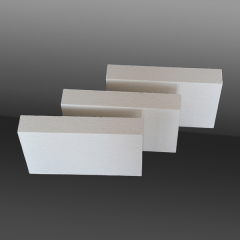
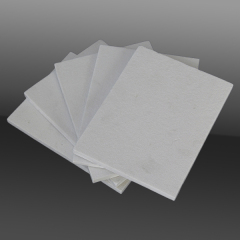
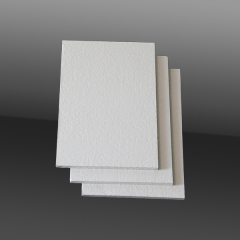
Standard size: 1000×600mm / 1200×600mm
-
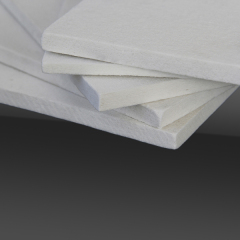
Thickness: 10–100mm
-
Density: 280–320 kg/m³
-
Surface: coating or reinforced treatment available
-
Customization: size, density, and composite structures
6. Applications
-
Industrial furnaces
-
Metallurgical equipment
-
Petrochemical and power industries
-
Aerospace insulation systems
-
New energy equipment
7. Installation Guide
-
Ensure clean and dry installation surface
-
Cut to required size
-
Fix by adhesive or mechanical fasteners
8. Comparison with Conventional Materials
| Property | Polycrystalline Board | Standard Fiber Board |
| Temperature | 1600°C | 1260–1400°C |
| Stability | High | Medium |
| Strength | High | Lower |
9. Quality Control
-
Raw material testing
-
Thermal conductivity testing
-
High-temperature testing
-
Strength testing
-
Environmental compliance testing
10. Packaging & Storage
-
Carton or pallet packaging
-
Avoid compression during transport
-
Store in dry and ventilated environment
11. Services
-
Free samples
-
Technical consultation
-
Custom manufacturing
-
After-sales support
12. FAQ
A1: Polycrystalline boards have a crystallized mullite structure, offering higher temperature resistance (up to 1600°C) and better stability.
Q2: Can it be customized?
A2: Yes, size, density, and structure can be customized.
Q3: Is it environmentally friendly?
A3: Yes, it is asbestos-free and complies with international standards.