










1. Product Overview
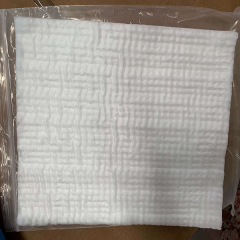
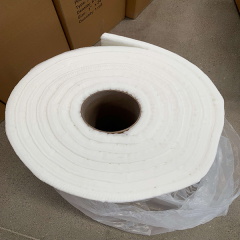
The 1600 °C high-temperature resistant polycrystalline ceramic fiber blanket is a premium refractory insulation material made from high-purity alumina via high-temperature melting, fiber spinning, and crystallization processes. It exhibits exceptional thermal stability, corrosion resistance, and thermal shock durability. Designed for continuous use up to 1600 °C and capable of enduring short-term higher temperatures, it is an upgrade over standard ceramic fiber products.
Its uniform fiber structure and superior physicochemical properties make it ideal for demanding applications in metallurgy, petrochemical, power generation, aerospace, defense, and high-temperature heat treatment, offering superior insulation, fire protection, and thermal performance.
2. Product Features
l Ultra-High Temperature Resistance: Stable performance up to 1600 °C over extended periods
l Exceptional Thermal Stability: Withstands repeated heating-cooling cycles without powdering or peeling
l Superior Chemical Stability: Resistant to most acids and alkalis—suitable for corrosive environments
l Low Thermal Conductivity: Offers excellent heat-shielding capability for energy saving
l Low Heat Capacity: Rapid thermal response—ideal for cyclical heating processes
l High Mechanical Strength & Flexibility: Easy to cut and install, not prone to breakage
l Eco-Friendly & Non-Toxic: Asbestos-free and compliant with RoHS and REACH standards
3. Technical Specifications
|
Property |
Value |
|
Maximum Operating Temperature |
≤ 1600 °C |
|
Melting Point |
> 1800 °C |
|
Density |
96 / 128 / 160 kg/m³ (customizable) |
|
Thermal Conductivity |
0.20 (800 °C), 0.29 (1000 °C), 0.38 (1200 °C) W/m·K |
|
Tensile Strength |
≥ 0.4 MPa |
|
Composition |
Al₂O₃ ≥ 72 %, SiO₂ ≤ 28 %, Others ≤ 1 % |
|
Flammability |
Non-combustible |
|
Eco Certifications |
RoHS, REACH |
4. Product Specifications
Thickness: 6 mm – 50 mm
Width: Standard 610 mm, customizable
Length: Up to 7200 mm (depends on thickness)
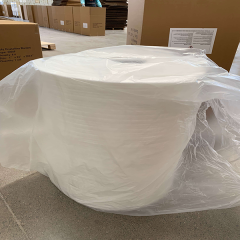
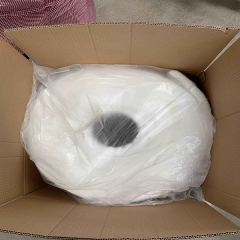
Packaging: Rolls wrapped in water-resistant film, boxed or palletized
Customization: Available for density, thickness, surface coatings
5. Applications
ü Industrial Furnaces: For linings and insulation in ceramic, glass, tunnel, and heat-treatment furnaces
ü Metallurgy: Insulation for ladle covers, heating furnaces, and soaking pits
ü Aerospace & Defense: Thermal protection in rocket nozzles, shields, and hot-flow components
ü Petrochemical & Power: Insulation for pipelines, reactors, and high-temperature equipment
ü Fire Seals & Expansion Joints: Used in fire doors, gaskets, and expansion joints
6. Installation & Handling
Ø Installation: Clean, dry environment recommended
Ø Methods: Cutting, bonding, anchor installation; modular system suggested for dynamic surfaces
Ø Safety: Personnel should use gloves, masks, and safety glasses
Ø Storage: Dry, ventilated area; avoid compression and direct sunlight
7. Comparison with Standard Fiber Blankets
|
Property |
Polycrystalline Blanket |
Standard Fiber Blanket |
|
Maximum Temperature |
1600 °C |
1260–1400 °C |
|
Thermal Stability |
Excellent |
Medium |
|
Chemical Stability |
Very High |
Moderate |
|
Anti-powdering |
Excellent |
Moderate |
|
Environmental |
Superior |
Adequate |
|
Cost |
Higher |
Medium |
|
Value Performance |
High |
Medium |
8. Quality Control
We maintain rigorous QA processes including:
Raw material purity (XRF analysis)
Thermal conductivity tests
Refractoriness evaluation
Fiber distribution (via SEM)
Tensile strength and density testing
RoHS / REACH compliance check
9. Packaging & Transportation
Packaging: Roll with water-resistant wrap in boxes or on pallets, labeled with product info
Shipping: Pallet recommended; export crates or bulk shipments available
Storage Conditions: –10 to 40 °C, no direct sunlight or moisture
10. Service & Support
- Samples: Free samples for testing and mock installations
- Technical Support: Selection advice, installation guidance, energy-saving analysis
- Customization: Size, density, composite material options available
- After-Sales: Quality-related replacement or engineering support
11. FAQ
Q1: What’s the key difference from standard fiber blanket?
A1: Higher service temperature (up to 1600 °C) due to crystallized structure vs. amorphous in standard blankets.
Q2: Where should it be used?
A2: Intense heat, corrosive, or rapidly cycling environments like aerospace or metallurgical equipment.
Q3: Is it environmentally safe?
A3: Yes, asbestos-free and compliant with RoHS and REACH standards.
Q4: Do you provide installation services?
A4: Yes, we offer guidance; full-install services available in select regions.
Q5: Is composite/aluminum foil-laminated version available?
A5: Yes, composite versions with foils, fabrics, or films can be provided.