










Description
Review
Description
1. Basic Composition of Ceramic Fiber Paper Production Line
(1) Pulping System:
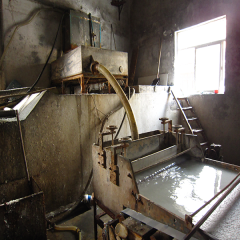
Function: Mixes ceramic fiber raw materials (loose fibers) with water and binders (e.g., colloidal silica, phosphate) to produce a uniform fiber slurry.
Equipment: Pulping machine, grinder, mixing tank.
Function: Mixes ceramic fiber raw materials (loose fibers) with water and binders (e.g., colloidal silica, phosphate) to produce a uniform fiber slurry.
Equipment: Pulping machine, grinder, mixing tank.
(2) Forming System:
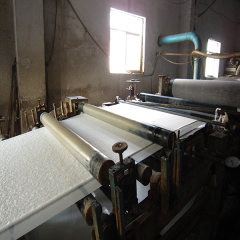
Function: Forms wet paper sheets from the slurry using papermaking techniques.
Equipment: Fourdrinier machine, cylinder mould machine, or inclined wire former (selected based on desired paper thickness and uniformity).
Function: Forms wet paper sheets from the slurry using papermaking techniques.
Equipment: Fourdrinier machine, cylinder mould machine, or inclined wire former (selected based on desired paper thickness and uniformity).
(3) Drying System:
Function: Removes moisture from wet paper sheets and solidifies the fiber structure.
Equipment: Hot air drying oven, roller dryer (low and high temperature zones, typically 100–300℃).
Function: Removes moisture from wet paper sheets and solidifies the fiber structure.
Equipment: Hot air drying oven, roller dryer (low and high temperature zones, typically 100–300℃).
(4) Post-processing System:
Function: Surface treatment, cutting, or rewinding of dried fiber paper.
Equipment: Calender machine (for smoothness), slitter, rewinder.
Function: Surface treatment, cutting, or rewinding of dried fiber paper.
Equipment: Calender machine (for smoothness), slitter, rewinder.
(5) Auxiliary Systems:
Water and air supply, dust removal equipment, and electrical control system (automated production parameter control).
Water and air supply, dust removal equipment, and electrical control system (automated production parameter control).
2. Core Process Flow
(1)Raw Material Preparation:
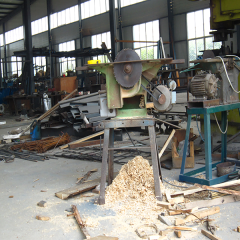
Ceramic fiber raw materials (e.g., short fibers produced by melt-blown method) are crushed, purified, and mixed with binders and dispersants according to the formula.
Ceramic fiber raw materials (e.g., short fibers produced by melt-blown method) are crushed, purified, and mixed with binders and dispersants according to the formula.
(2)Pulping:
Fibers are fully dispersed in water in the pulping machine to form a uniform slurry (1–3% concentration; fiber length 0.5–3 mm).
Fibers are fully dispersed in water in the pulping machine to form a uniform slurry (1–3% concentration; fiber length 0.5–3 mm).
(3)Papermaking/Forming:
Slurry is evenly spread on the forming wire through a headbox, vacuum-dewatered, and pressed by rollers to form wet paper sheets (thickness 0.5–5 mm).
Slurry is evenly spread on the forming wire through a headbox, vacuum-dewatered, and pressed by rollers to form wet paper sheets (thickness 0.5–5 mm).
(4)Drying and Curing:
Wet sheets are conveyed into a drying oven. Hot air or infrared heating reduces moisture to below 3% while curing the binder to strengthen fiber bonding.
Wet sheets are conveyed into a drying oven. Hot air or infrared heating reduces moisture to below 3% while curing the binder to strengthen fiber bonding.
(5)Cutting and Packaging:
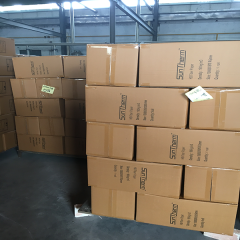
Dried fiber paper is calendered, cut into specified sizes (e.g., standard rolls or sheets), quality-inspected, and packed for storage.
Dried fiber paper is calendered, cut into specified sizes (e.g., standard rolls or sheets), quality-inspected, and packed for storage.

3. Product Features and Applications
(1)Features:
ü High-temperature resistance: 600–1400℃ (depending on fiber type)
ü Low thermal conductivity: 0.03–0.06 W/(m·K)
ü Excellent thermal shock resistance
ü Easy to process: can be cut or punched
(2)Applications:
ü Industrial Insulation: Furnace linings, pipe insulation, high-temperature gaskets
ü Electronics/Electrical: Heating element insulation, oven sealing gaskets
ü Aerospace: Engine insulation components, fireproof partitions (meeting flame retardant standards)
ü Special Applications: Nuclear power insulation, fireproof materials (e.g., fire curtain layers)
4. Development Trends
Ø Energy Efficiency: Adoption of heat pump drying and waste heat recovery to reduce energy consumption
Ø High Performance: Development of low-chlorine, corrosion-resistant ceramic fiber paper for chemical furnaces
Ø Intelligent Manufacturing: Online detection systems (thickness, moisture monitoring) for improved consistency
5. FAQ
Q1: Can the production line manufacture different types of ceramic fiber paper?
A1: Yes. Based on temperature requirements, it can produce standard, high-alumina, zirconium-containing, and other types of ceramic fiber paper.
A1: Yes. Based on temperature requirements, it can produce standard, high-alumina, zirconium-containing, and other types of ceramic fiber paper.
Q2: What is the estimated investment for a ceramic fiber paper production line?
A2: Small production lines: 2–5 million RMB. Medium production lines (including factory and environmental facilities): 8–15 million RMB.
A2: Small production lines: 2–5 million RMB. Medium production lines (including factory and environmental facilities): 8–15 million RMB.
Q3: What thickness range can the ceramic fiber paper production line produce?
A3: Common thickness range is 0.5–13 mm. With ongoing technological advancements, thinner paper may be possible in the future.
A3: Common thickness range is 0.5–13 mm. With ongoing technological advancements, thinner paper may be possible in the future.
Review
Review
Send your message to us