










1. Product Overview
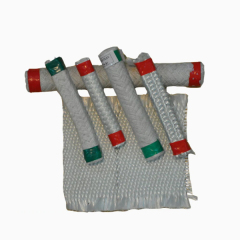
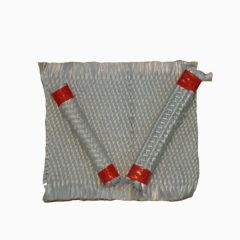
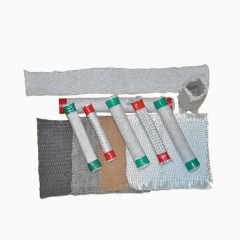
Ceramic fiber textiles are a class of high-temperature refractory materials made primarily from ceramic fibers, reinforced with fiberglass or metal wire, and manufactured through specialized textile processes. The main product types include ceramic fiber cloth, tape, rope, twisted rope, square rope, and core-spun rope. These textiles feature excellent thermal insulation, flexibility, and thermal shock resistance, making them ideal for high-temperature sealing, insulation, and fire protection in industrial applications.
2. Main Types & Structure
(1) Ceramic Fiber Cloth
Typically 1000 mm in width, with thicknesses ranging from 1.5 mm to 6 mm. The surface is smooth and soft, suitable for equipment wrapping and flange sealing.
(2) Ceramic Fiber Tape
Cut from cloth into specified widths, used for pipe wrapping and expansion joint filling.
(3) Ceramic Fiber Round Rope (Core-Spun Rope)
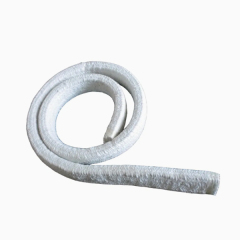
Made with ceramic fiber yarn on the outer layer and ceramic fiber bulk or fiberglass yarn inside. Widely used for high-temperature sealing and expansion joint filling.
(4) Ceramic Fiber Square Rope
Has a square cross-section for enhanced sealing effect. Ideal for critical areas such as furnace doors and boiler door edges.
(5) Ceramic Fiber Twisted Rope
Tightly constructed and highly durable, suitable for applications requiring tensile strength.
Reinforcement:
Stainless steel or nickel-chromium wire reinforcement can be added to enhance strength and temperature resistance for specific applications.
3. Key Features
▶ High-temperature stability: Continuous use at 1000–1260°C, short-term up to 1350°C.
▶ Excellent flexibility & mechanical strength: Easy to install and resistant to breakage.
▶ Superior thermal insulation: Low thermal conductivity for effective energy saving.
▶ Strong thermal shock & chemical resistance: Resists most acids and alkalis (excluding hydrofluoric and phosphoric acids).
▶ Asbestos-free & eco-friendly: Biodegradable fiber options available to meet EU environmental standards.
▶ Highly workable: Can be cut, sewn, and wrapped for complex installation needs.

4. Technical Specifications
|
Parameter |
Value |
|
Working Temperature |
1050–1260°C |
|
Melting Point |
≥1760°C |
|
Density |
500–750 kg/m³ |
|
Thermal Conductivity (800°C) |
≤0.13 W/m·K |
|
Tensile Strength |
≥0.3 MPa |
|
Organic Content |
≤15% (low-organic options available) |
|
Reinforcement Materials |
Fiberglass / Stainless steel (optional) |
5. Applications
(1)Ceramic fiber textiles are widely used in:
(2)High-temperature sealing and insulation in industrial furnaces, heat treatment units, and heating equipment
(3)Pipeline insulation, valve and flange sealing in petrochemical industries
(4)Furnace door seals, mouth covers, and ladle cap edges in the metallurgy industry
(5)Boiler seals and turbine insulation in power plants
(6)Fireproof expansion joints and seal strips in construction, fire doors, and fire-resistant systems
(7)Heat-resistant components in aerospace and shipbuilding industries
6. Product Selection Guide
▶ To select the appropriate ceramic fiber textile, consider the following:
▶ Operating temperature: Choose based on standard, high purity, or high alumina grades
▶ Mechanical stress: For friction or tensile stress, reinforced types are recommended
▶ Reinforcement needs: Stainless steel wire suits high-temperature, high-tension use
▶ Eco-friendly options: Bio-soluble ceramic fiber versions are available
▶ Application form: Wrapping, sealing pads, sewing, or joint filling requirements

7. Packaging & Transportation
Ø Typically packed in cartons or woven bags with plastic film for moisture protection
Ø Length, size, and quantity can be customized as required
Ø During storage and transport, keep dry, avoid compression, sunlight, and corrosive environments
8. Quality Control & Certifications
All ceramic fiber textile products are certified under ISO 9001 and comply with EU standards such as RoHS, REACH, and CE. Each batch undergoes:
High-temperature performance testing
Tensile strength evaluation
Visual and dimensional inspection
This ensures consistent and reliable quality.
9. Customization Services
We offer the following customization options:
Customized widths, thicknesses, and lengths
OEM branding services
High-temperature label and sewing services
Bio-soluble ceramic fiber textile options
Export-compliant packaging customization
10. FAQ
Q1: Can ceramic fiber textiles be exposed to open flame for long periods?
A1: Most types withstand 1050–1260°C and are suitable for intermittent flame contact. For continuous flame exposure, we recommend high-alumina or stainless-steel reinforced types.
Q2: Do you provide food-grade or eco-friendly ceramic fiber cloth?
A2: Yes. We offer asbestos-free, low-organic, and bio-soluble options that comply with RoHS and REACH standards.
Q3: Will the fabric emit smoke at high temperatures?
A3: A small amount of smoke may be released initially due to organic binders burning off. This is normal and ceases after sintering.
Q4: When should I choose wire-reinforced types?
A4: If the application involves mechanical shock, tensile force, or higher temperatures, stainless-steel reinforced products offer better durability and structural strength.
Q5: Do you support small-batch orders?
A5: Yes, we support custom and small-batch orders, ideal for project trials or sample evaluation.

Ceramic fiber textiles, with their outstanding thermal properties, workability, and environmental safety, are widely used across global high-temperature industries. We are committed to providing tailored solutions and complete technical support—from product design to after-sales service. For technical datasheets, samples, or quotations, please contact our sales team at any time.

