










1. Product Overview
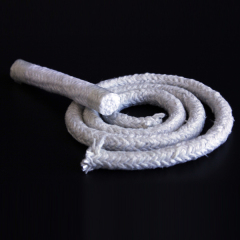
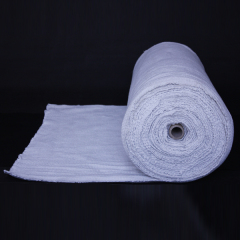
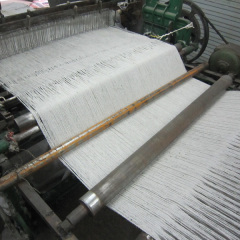
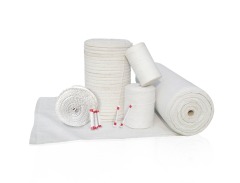
The product range includes ceramic fiber cloth, ceramic fiber tape, ceramic fiber rope, ceramic fiber sleeves, and other forms. These materials feature high-temperature resistance (over 1260℃), low thermal conductivity (0.03–0.05 W/(m·K)), chemical corrosion resistance, and flexibility for easy processing. They are widely used in industrial furnace sealing, high-temperature pipe insulation, fire protection equipment, aerospace components, and serve as an eco-friendly, high-performance alternative to asbestos products.
2. Technical Specifications
Ceramic Fiber Rope
|
Item |
Glass Fiber Rope Reinforced with Ceramic Fiber |
Ceramic Fiber Rope Reinforced with Steel Wire |
|
Working Temperature (℃) |
650 |
1050 |
|
Base Material |
Aluminosilicate ceramic fiber + aluminum glass fiber |
Silicate ceramic fiber + steel wire |
|
Organic Content (%) |
≤15 |
≤15 |
|
Density (kg/m³) |
600–650 |
600–650 |
|
Moisture Content (%) |
≤2 |
≤2 |
|
Diameter |
3–90 mm; customizable per client requirements |
3–90 mm; customizable per client requirements |
|
Certification |
CE, ISO9001-2008, ISO14001-2004, SGS, ROHS, SASO, REACH |
CE, ISO9001-2008, ISO14001-2004, SGS, ROHS, SASO, REACH |
Note: For other technical parameters, please consult the company sales manager.
Ceramic Fiber Cloth
|
Item |
Glass Fiber Reinforced Ceramic Fiber Cloth |
Steel Wire Reinforced Ceramic Fiber Cloth |
|
Working Temperature (℃) |
650 |
1050 |
|
Base Material |
Aluminosilicate ceramic fiber + glass fiber |
Aluminosilicate ceramic fiber + steel wire |
|
Organic Content (%) |
≤15 |
≤15 |
|
Density (kg/m³) |
500–550 |
500–550 |
|
Moisture Content (%) |
≤2 |
≤2 |
|
Warp Density |
56–60 threads/10 cm |
56–60 threads/10 cm |
|
Weft Density |
24–30 threads/10 cm |
24–30 threads/10 cm |
|
Dimensions (mm) |
Length: 30,000; Width: 100; Thickness: 1.5–6; customizable |
Length: 30,000; Width: 100; Thickness: 1.5–6; customizable |
|
Certification |
CE, ISO9001-2008, ISO14001-2004, SGS, ROHS, SASO, REACH |
CE, ISO9001-2008, ISO14001-2004, SGS, ROHS, SASO, REACH |
Ceramic Fiber Tape
|
Item |
Glass Fiber Reinforced Ceramic Fiber Tape |
Steel Wire Reinforced Ceramic Fiber Tape |
|
Working Temperature (℃) |
650 |
1050 |
|
Base Material |
Aluminosilicate ceramic fiber + glass fiber |
Aluminosilicate ceramic fiber + steel wire |
|
Organic Content (%) |
≤15 |
≤15 |
|
Density (kg/m³) |
500–550 |
500–550 |
|
Moisture Content (%) |
≤2 |
≤2 |
|
Warp Density |
56–60 threads/10 cm |
56–60 threads/10 cm |
|
Weft Density |
24–30 threads/10 cm |
24–30 threads/10 cm |
|
Dimensions (mm) |
Length: 30,000; Width: 15–50; Thickness: 1.5–6; customizable |
Length: 30,000; Width: 15–50; Thickness: 1.5–6; customizable |
|
Certification |
CE, ISO9001-2008, ISO14001-2004, SGS, ROHS, SASO, REACH |
CE, ISO9001-2008, ISO14001-2004, SGS, ROHS, SASO, REACH |
Note: For other technical parameters, please consult the company sales manager.
3. Core Advantages
(1) Exceptional High-Temperature Resistance
l Withstands up to 1260℃: Made from high-purity alumina and reinforced fibers, maintaining stability in extreme high-temperature conditions, superior to conventional glass fibers (max 250℃).
l Excellent thermal shock resistance: Flexible fiber structure resists cracking and flaking under sudden heating or cooling.
(2) Efficient Insulation and Energy Saving
l Ultra-low thermal conductivity: 0.03 W/(m·K) at room temperature, reducing heat loss by over 70%.
l Multi-layer composite design: Can be combined with aluminum foil or fiberglass cloth to create multi-layer insulation barriers, ideal for high-temperature equipment.
(3) Superior Safety and Fire Protection
l Class A fireproof: Does not burn or release toxic gases when exposed to flame; certified by IMO, EN standards, suitable for ship engine rooms and chemical plants.
l Molten metal resistance: Excellent protection against molten metals like aluminum and zinc; used for furnace linings and metal melt filtration.
(4) Environmental and Health Safety
l Non-toxic: SGS-tested, free from asbestos, formaldehyde, or other harmful substances, meeting medical and food-grade hygiene standards.
l Recyclable: Inorganic material can be reused, reducing industrial waste.
(5) Flexible Processing and Long Service Life
l Easy to cut and shape: Supports on-site cutting and sewing, adapts to irregular surfaces, minimizing installation loss.
l Aging and deformation resistant: Inorganic fiber structure stable, service life over 10 years, no settlement risk.
4. Installation & Maintenance Guidelines
(1) Installation Tips
■ Surface preparation: Clean oil and burrs from substrate to ensure seamless adhesion.
■ Fixing method: Use high-temperature anchors or alloy wire ties, spacing ≤300 mm.
(2) Joint Treatment
■ Seal seams with ceramic fiber glue or aluminum foil tape to prevent thermal bridging.
(3) Usage Notes
■ Initial heating may produce smoke: Organic fiber carbonization is normal; continue heating above 300℃ to eliminate.
■ Avoid mechanical abrasion: Install metal protective plates on surfaces to prevent high-speed airflow erosion.
5. Service & Warranty
▶ Full Certification: ISO9001, CE, DNV-GL certified; third-party test reports available.
▶ Customized Production: Supports tailored sizes, densities, and reinforcement materials; fast delivery in 3–7 days.
▶ Technical Support: Free thermal calculation and installation design services; full tracking support.
6. FAQ
Q1: How does ceramic fiber cloth differ from glass fiber cloth?
A1: Ceramic fiber withstands higher temperatures (1260℃ vs 250℃) and resists chemical corrosion, suitable for high-temperature acidic/alkaline environments. Glass fiber is lower cost but more brittle.
Q2: Does humidity affect performance?
A2: Standard products have water absorption <5%; optional hydrophobic coating (<1%) or moisture/vapor barrier can be used.
Q3: Are composite structures supported?
A3: Yes. Can be combined with aluminum foil (reflective insulation), silicone coating (enhanced airtightness), or stainless steel wire reinforcement (improved tensile strength).

