


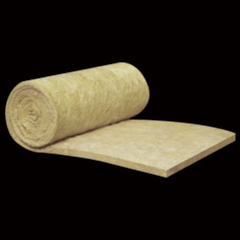


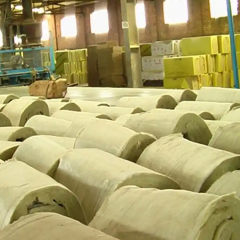


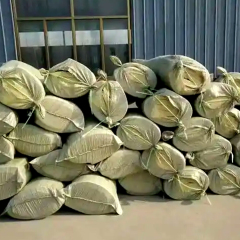


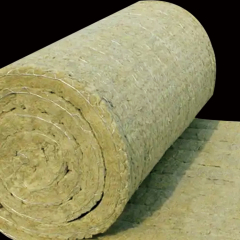


1. Technical Specifications
| Description | Stone Wool Blanket 45 | Stone Wool Blanket 65 |
| Maximum operating temperature (℃) | 550 | 750 |
| Recommended operating temperature (℃) | 450 | 650 |
| Surface combustion characteristics | ||
| Smoke development index | ≤25 | ≤25 |
| Flame spread index | 0 | 0 |
| Combustion performance | Non-combustible A1 | Non-combustible A1 |
| Bulk water absorption (%) | ≤1 | ≤1 |
| Mass water absorption (%) | ≤1 | ≤1 |
| Density (kg/m³) | 80 | 100 |
| Thermal conductivity (W/m·K) | ||
| 70℃ | 0.040 | 0.035 |
| 100℃ | 0.046 | 0.042 |
| 150℃ | 0.050 | 0.048 |
| 200℃ | 0.064 | 0.056 |
| 250℃ | 0.076 | 0.063 |
| 300℃ | 0.080 | 0.070 |
| 350℃ | / | 0.077 |
| 400℃ | / | 0.085 |
| Health & Safety | Asbestos-free, no irritating odor, bacteria-free | |
Note: For information on other technical characteristics of the product, please consult the company’s sales manager.
2. Key Product Advantages
(1) Excellent Fire Resistance
Non-combustible materials Class A1: Passed national fire tests, do not ignite when exposed to open flame, do not release toxic gases, and effectively prevent fire spread.
High thermal resistance: Can withstand temperatures up to 650℃ without deformation, suitable for high-temperature applications such as boilers and pipelines.
(2) Highly Efficient Thermal Insulation
Low thermal conductivity: Thermal conductivity of 0.035 W/(m·K), better than traditional mineral wool materials, increasing energy savings by over 30%.
Three-dimensional mesh structure: Fibers arranged in a staggered manner form closed air pockets that block heat convection and conduction.
(3) Superior Sound Absorption and Noise Reduction
Noise Reduction Coefficient (NRC) 0.8–0.95: Effectively absorbs medium and high-frequency noise, ideal for soundproofing spaces like computer rooms and workshops.
(4) Environmental and Health Protection
Asbestos-free: Tested by SGS and contains no harmful substances such as CFCs or HCFCs.
Mold protection and antibacterial: Inorganic material prevents mold growth, meeting hygiene standards for hospitals and food processing areas.
(5) Durable Performance
Anti-aging: Inorganic fibers do not decompose and have a service life of over 30 years.
Water-repellent treatment: Additional surface waterproof coating with water absorption <1%, suitable for humid environments.
(6) Economical and Convenient Design
Flexibility and easy cutting: Can be cut on-site, suitable for irregular surfaces, and reduces thermal bridges at joints.
Lightweight: Density is only 1/20 of traditional brick walls, reducing building load.
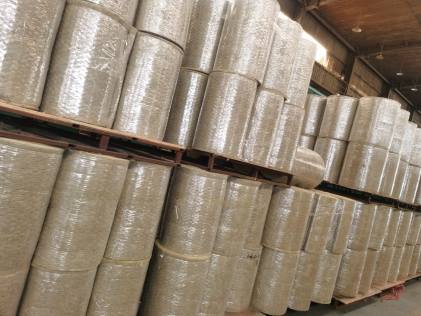
3. Recommended Applications
(1) Construction
- Exterior wall insulation systems: Used with plaster in compliance with the "Architectural Fire Protection Code".
- Roof thermal insulation: Apply a waterproof membrane to reduce top-floor temperature by 5–8℃ in summer.
- Fireproof insulation belt: Install a 300 mm wide mineral wool belt in polystyrene insulation systems to prevent vertical fire spread.
(2) Industrial Equipment
- Pipeline insulation: Suitable for pipes DN15–DN1200, temperature range -50℃ to 400℃.
- Boiler firing furnace: Used as exterior insulation to reduce surface temperature below 50℃.
- Storage tank insulation: Reduces heat loss for LNG, crude oil, and other media.
(3) Specialized Industries
- Ship cabins: IMO FTPC-certified, used for fireproof insulation of walls and decks.
- Cleanrooms: Anti-static mineral wool coating meets dust-free requirements of electronics workshops.
- Agricultural greenhouses: Retains heat at night to reduce heat loss and prevent freezing.
4. Construction and Installation Guide
(1) Pre-treatment Key Points
- Base preparation: Remove oil stains and loose ash; level uneven areas with mortar.
- Cutting specifications: Use professional tools and cut with 5% allowance according to actual dimensions.
(2) Installation Steps
- Lay horizontally from bottom to top with ≤2 mm spacing per roll.
- Use plastic anchors for fixing (spacing ≤400 mm).
- Seal joints with aluminum foil tape.
- Install protective plate or wipe the outer layer.
(3) Safety Precautions
- Respirators and safety goggles are required for work at height.
- Construction is prohibited on rainy days; avoid rain for 24 hours after completion.
- Maintain ≥300 mm spacing when applying organic materials such as polyurethane.
5. Purchasing Recommendations
- Select product type according to application scenario:
- Economical & General-purpose: Density 80 kg/m³, suitable for regular wall insulation.
- High-temperature reinforced type: Density 120 kg/m³ + ceramic fiber coating, suitable for boiler pipes.
- Clean & Mold-resistant type: PVC film on the surface, used in food and medical workshops.
- Special ship type: Certified by DNV-GL.
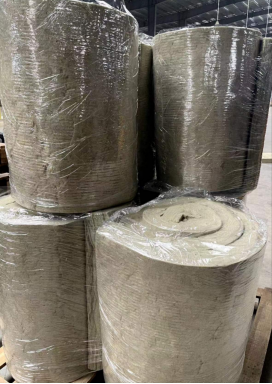
6. Frequently Asked Questions
Q1: What is the difference between stone wool and glass wool?
A1: Mineral wool has higher thermal resistance (650℃ vs 250℃) and greater strength, suitable for high-temperature and harsh environments. Glass wool has finer fibers, slightly better sound absorption, but low moisture resistance.
Q2: Will it settle after long-term use?
A2: With vertical fiber orientation technology, 20-year compression is <3%, much lower than the 10% requirement of national standards.
Q3: How to handle humid environments?
A3: It is recommended to choose waterproof products with ≥98% hydrophobicity or install a waterproof and vapor-proof layer.
Q4: Is it irritating to the skin?
A4: The product has a surface coating. Normal workwear can be worn during construction, and any residual fibers can be removed by washing the skin.

