












1. Technical Specifications
|
Description |
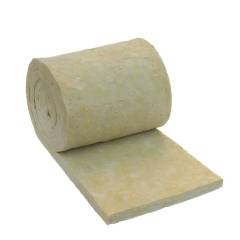
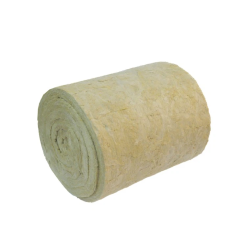
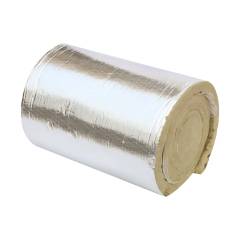
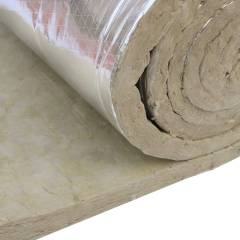
Rock Wool Blanket 45 |
Rock Wool Blanket 65 |
|
Maximum Service Temperature (℃) |
550 |
750 |
|
Recommended Service Temperature (℃) |
450 |
650 |
|
Surface Combustion Properties |
Smoke Development Index |
≤25 |
|
|
Flame Spread Index |
0 |
|
Combustion Performance |
Non-Combustible A1 |
Non-Combustible A1 |
|
Bulk Moisture Content (%) |
≤1 |
≤1 |
|
Mass Moisture Content (%) |
≤1 |
≤1 |
|
Density (kg/m³) |
80 |
100 |
|
Thermal Conductivity (W/m·K) |
70℃ |
0.040 |
|
100℃ |
0.046 |
|
|
150℃ |
0.050 |
|
|
200℃ |
0.064 |
|
|
250℃ |
0.076 |
|
|
300℃ |
0.080 |
|
|
350℃ |
/ |
|
|
400℃ |
/ |
|
|
Health & Safety |
Asbestos-free, odorless, bacteria-free |
Asbestos-free, odorless, bacteria-free |
Note: For information on other technical parameters, please consult the company sales manager.
2. Core Product Advantages
(1) Excellent Fire Resistance
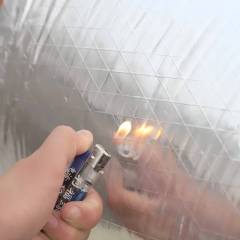
A1 Non-Combustible Material: Certified by national fire testing; does not burn or emit toxic gases when exposed to open flames, effectively slowing fire spread.
High-Temperature Stability: Maintains shape up to 650℃, suitable for boilers, pipelines, and other high-temperature applications.
(2) Efficient Thermal Insulation
Low Thermal Conductivity: 0.035 W/(m·K), superior to conventional mineral wool, achieving over 30% energy savings.
Three-Dimensional Fiber Network: Interlaced fibers form closed air chambers, blocking heat convection and conduction.
(3) Superior Sound Absorption
NRC 0.8–0.95: Effectively absorbs mid- and high-frequency noise, suitable for machine rooms, workshops, and other noise-sensitive environments.
(4) Environmental and Health Safety
Asbestos-Free Certification: SGS-tested, free of CFCs, HCFCs, and other harmful substances.
Mold and Bacteria Resistant: Inorganic composition prevents mold growth; compliant with hygiene standards for hospitals and food production facilities.
(5) Durable Performance
Aging Resistant: Inorganic fibers do not degrade; service life exceeds 30 years.
Hydrophobic Treatment: Optional waterproof coating; water absorption <1%, suitable for humid environments.
(6) Easy and Cost-Effective Installation
Flexible and Easy to Cut: Can be cut on-site to fit irregular surfaces, reducing thermal bridges at seams.
Lightweight: Density is only 1/20 of conventional brick walls, reducing structural load.

3. Recommended Application Scenarios
(1) Construction
Exterior Wall Insulation Systems: Used with plaster mortar to meet building fire protection codes.
Roof Thermal Insulation: Combined with waterproof membranes, reduces top-floor summer temperatures by 5–8℃.
Fire Separation Strips: 300 mm wide rock wool strips in polystyrene insulation systems to block vertical fire spread.
(2) Industrial Equipment
Pipeline Insulation: Suitable for DN15–DN1200; temperature range −50℃ to 400℃.
Boilers and Furnaces: Outer insulation layer lowers surface temperature below 50℃.
Storage Tanks: Reduces heat loss in LNG, crude oil, and other mediums.
(3) Special Industries
Marine Compartments: IMO FTPC-certified for fireproofing engine room walls and decks.
Cleanrooms: Anti-static rock wool blankets meet dust-control requirements in electronics workshops.
Agricultural Greenhouses: Provides nighttime insulation, reduces heat loss, and protects against frost.
4. Installation Guidelines
(1) Pre-Treatment
Surface Preparation: Remove oil, dust, and level uneven surfaces with mortar.
Cutting Specifications: Use professional tools to cut with 5% extra allowance.
(2) Installation Steps
Lay horizontally from bottom to top, with ≤2 mm gap between rolls.
Secure with plastic anchors spaced ≤400 mm.
Seal joints with aluminum foil tape.
Install protective boards or plaster layer on the outer surface.
(3) Precautions
Wear dust masks and goggles for high-altitude work.
Do not install during rain; avoid water exposure within 24 hours of installation.
Maintain ≥300 mm spacing from polyurethane or other organic materials.
5. Selection Recommendations
l Economic General-Purpose: Density 80 kg/m³, suitable for standard wall insulation.
l High-Temperature Reinforced: Density 120 kg/m³ with ceramic fiber coating, ideal for boilers and pipelines.
l Cleanroom and Anti-Mold: PVC-coated surface, suitable for food and pharmaceutical facilities.
l Marine-Specific: DNV-GL certified for ship applications.

6. FAQ
Q1: What is the difference between rock wool and glass wool?
A1: Rock wool has higher temperature resistance (650℃ vs 250℃) and greater strength, suitable for high-temperature, heavy-duty scenarios; glass wool has finer fibers and slightly better sound absorption but lower moisture resistance.
Q2: Will it settle over long-term use?
A2: Vertical fiber orientation technology ensures <3% compression over 20 years, far below the national standard limit of 10%.
Q3: How to handle humid environments?
A3: Use waterproof products with ≥98% water repellency or add a moisture/vapor barrier.
Q4: Does it irritate the skin?
A4: The product surface is treated; ordinary work clothes are sufficient during installation, and fiber residue can be washed off the skin.

