










Description
Review
Description
1. Product Overview
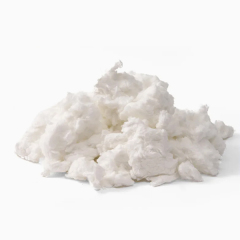
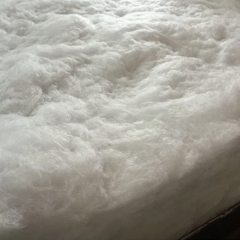
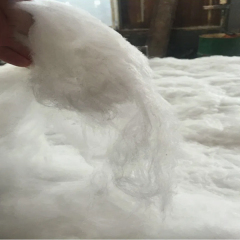
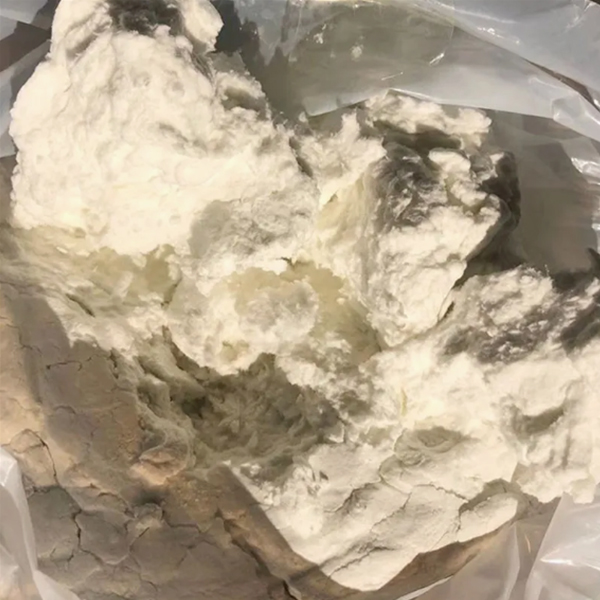
Bio-soluble ceramic fiber wool maintains excellent thermal insulation performance under high-temperature conditions. At the same time, it exhibits good bio-solubility in the human body, allowing it to naturally metabolize and be excreted in a short period. This effectively avoids the long-term lung accumulation risks associated with traditional ceramic fibers. As such, it not only meets modern industrial requirements for high-temperature insulation materials but also complies with EU REACH and RoHS safety and environmental standards, making it an ideal alternative to conventional ceramic fiber wool.
2. Product Features
▶ Strong bio-solubility: Dissolves rapidly under simulated body fluid conditions; compliant with EU Q/S and German TRGS905 standards.
▶ Excellent thermal stability: Continuous working temperature up to 1100℃; can withstand higher short-term temperature shocks.
▶Low thermal conductivity: Uniform fiber structure with interlaced arrangement effectively reduces heat transfer.
▶Good sound insulation and vibration damping: Suitable for thermotechnical systems requiring acoustic performance.
▶Lightweight and high strength: Low density for easy transportation and installation.
▶Good workability: Can be cut, filled, or twisted to meet different process requirements.

3. Key Technical Parameters
|
Project |
1100 Wool |
1300 Wool |
|
Classification Temperature (℃) |
1100 |
1300 |
|
Chemical Composition |
|
|
|
SiO₂ (%) |
62–68 |
≥70 |
|
CaO (%) |
26–32 |
- |
|
MgO (%) |
4–7 |
- |
|
CaO+MgO (%) |
- |
≥20 |
|
Color |
Pure White |
Pure White |
|
Content of slag balls (%) |
≤12 |
≤12 |
|
Fiber Diameter (μm) |
3–5 |
3–5 |
Note: For additional technical specifications, please consult the company’s sales manager.
4. Applications
Bio-soluble ceramic fiber wool is widely used in various industrial furnaces, heat treatment equipment, and high-temperature piping systems. It is also suitable for industries such as food, pharmaceuticals, and electronics, where environmental protection and human safety are of higher concern. Typical applications include:
(1)Furnace linings and insulation in industrial kilns.
(2)Insulation filling for heaters and hot-air ducts.
(3)Automotive exhaust systems and engine hood insulation.
(4)Thermal insulation in household appliances such as ovens and water heaters.
(5)Thermal protection structures for nuclear and high-tech equipment.
5. Environmental Safety
With increasingly strict occupational health and environmental regulations worldwide, traditional insoluble ceramic fibers are increasingly restricted due to potential lung hazards. In contrast, bio-soluble ceramic fiber wool is made from natural minerals through a special melting and blowing process. It dissolves and metabolizes in the human body, causing no biological accumulation, and significantly reduces occupational exposure risks. It is widely adopted in the EU, Japan, North America, and other regions.
6. Packaging and Storage
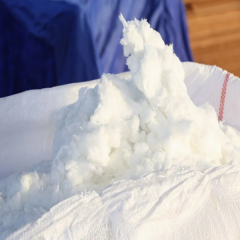
(1)Packaging: Compressed, in plastic bags or cartons, moisture- and dust-proof.
(2)Transportation: Non-hazardous; can be shipped using conventional methods.
(3)Storage: Recommended in dry, ventilated conditions, avoiding moisture and mechanical compression.
(4)Shelf Life: Suggested use within 12 months; for long-term storage, ensure proper sealing.
7. Why Choose Bio-Soluble Ceramic Fiber Wool?
✅ Enhances occupational safety and reduces health risks for workers
✅ Replaces traditional ceramic fiber products, supporting green manufacturing
✅ Complies with EU and US export regulations
✅ Performs reliably in various high-temperature applications
✅ Customizable thickness, density, and roll length to meet different process requirements
✅ Replaces traditional ceramic fiber products, supporting green manufacturing
✅ Complies with EU and US export regulations
✅ Performs reliably in various high-temperature applications
✅ Customizable thickness, density, and roll length to meet different process requirements
8. FAQ
Q1: Can this product be exported to Europe? Is there relevant certification?
A1: Yes. The product fully complies with EU REACH regulations and German TRGS905 standards for inhalable fiber materials, suitable for export to the EU, North America, Japan, and other markets.
A1: Yes. The product fully complies with EU REACH regulations and German TRGS905 standards for inhalable fiber materials, suitable for export to the EU, North America, Japan, and other markets.
Q2: Can the dimensions or density be customized for specific projects?
A2: Yes. We support customization of thickness (typically 20–50 mm), density (64/96/128 kg/m³), and roll length. Deep processing services such as slicing or die-cutting are also available.
A2: Yes. We support customization of thickness (typically 20–50 mm), density (64/96/128 kg/m³), and roll length. Deep processing services such as slicing or die-cutting are also available.
Q3: What is the maximum temperature the bio-soluble ceramic fiber wool can withstand?
A3: The classification temperature is 1200℃, with a recommended continuous working temperature of up to 1100℃ to ensure long-term stability of the material structure and performance.
A3: The classification temperature is 1200℃, with a recommended continuous working temperature of up to 1100℃ to ensure long-term stability of the material structure and performance.
Review
Review
Send your message to us

