

How does the cutting system in a rock wool production line work?
Views : 336
Update time : 2024-10-22 10:44:34
How does the cutting system in a rock wool production line work?
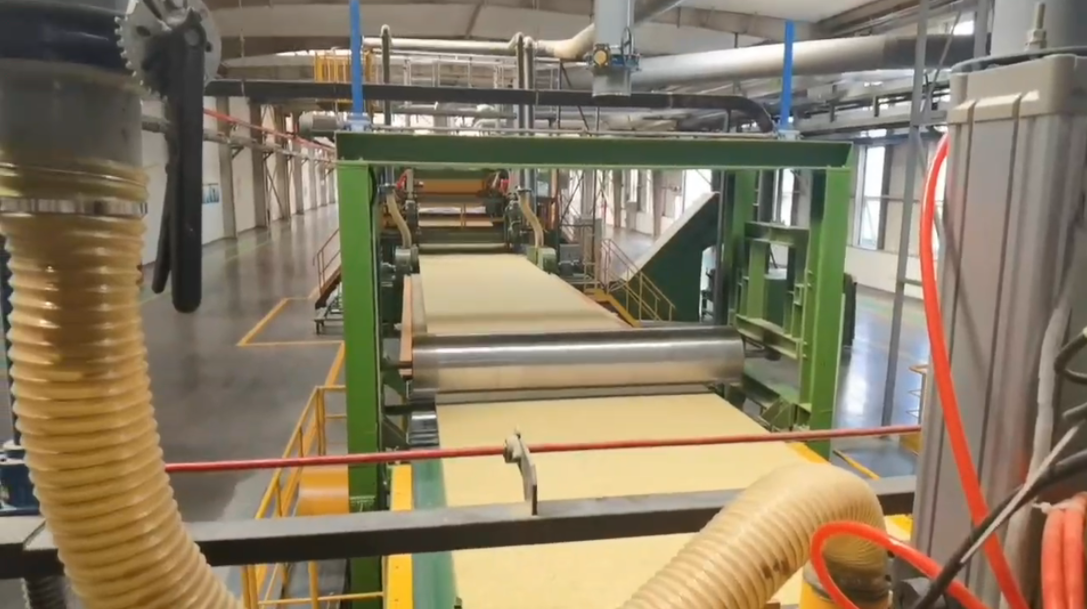
The cutting system in the rock wool production line undertakes the important task of cutting the finished rock wool material into rock wool boards of different specifications and sizes. The following is the workflow and key points of the cutting system in the rock wool production line:
I. Workflow
1. Raw material preparation and pretreatment
▶The raw materials (such as basalt slag) undergo pretreatment steps such as melting and fiberization to form inorganic wool.
▶The inorganic wool is cooled, shaped, and treated to increase hardness and density to obtain rock wool materials with certain properties and shapes.
2. Preparation before cutting
▶Before the rock wool material is fed into the cutting system, it is usually necessary to measure and mark the size to ensure the accuracy of the cutting.
▶The cutting system will adjust according to the preset parameters (such as length, width, thickness, etc.).
3. Cutting operation
▶In the traditional rock wool processing process, cutting is often done by mechanical tools or water jets. In modern rock wool production lines, wire cutting technology is widely used due to its high precision and flexibility.
▶Wire cutting uses hair-thin metal wires (such as molybdenum wires or tungsten wires) as cutting tools.
▶The rock wool board is cut with high precision and contactless by energy forms such as electric spark discharge or laser.
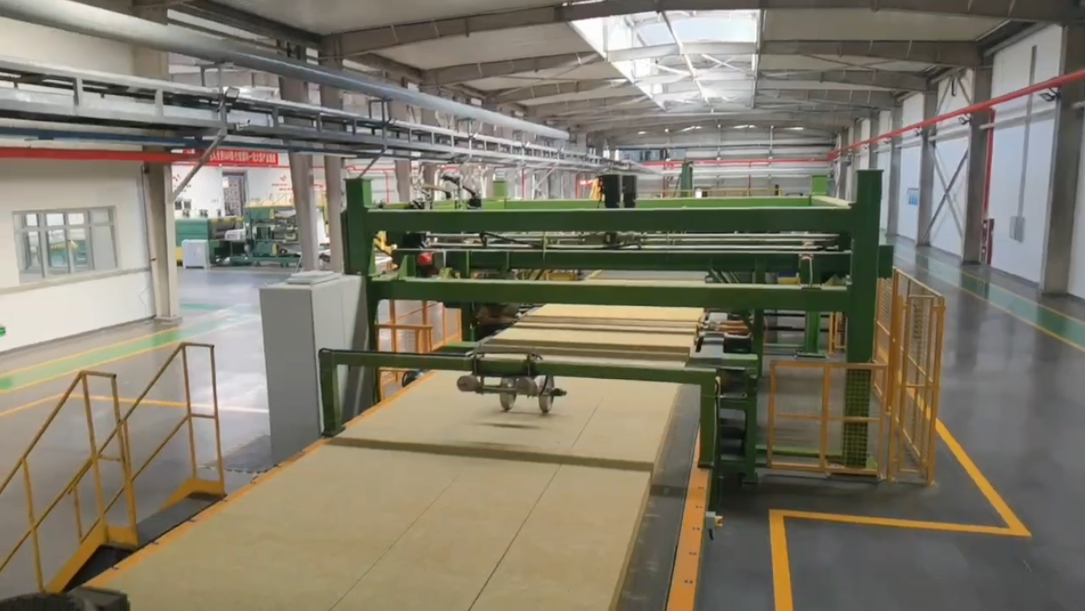
▶The cutting system also includes longitudinal cutters and transverse cutters, which work together to cut the rock wool material into the required shape and size.
▶During the cutting process, the system monitors the cutting quality in real time, such as the flatness of the cutting surface, dimensional accuracy, etc.
4. Post-cutting processing
▶The cut rock wool board will be sent to the cooling conveyor for cooling to prevent the heat generated by cutting from affecting the product quality.
▶The waste generated by cutting will be collected and sent to the waste edge recovery system for processing to achieve resource recycling.
2. Key points
2. Key points
1. Cutting accuracy
▶The accuracy of the cutting system directly affects the quality of the rock wool board. Modern cutting systems can usually achieve cutting accuracy of millimeters or even higher.
▶In order to ensure cutting accuracy, the system needs to be maintained and calibrated regularly.
2. Cutting efficiency
▶Cutting efficiency is one of the important indicators to measure the performance of the cutting system. An efficient cutting system can reduce production cycle and cost.
▶Cutting efficiency can be improved by optimizing cutting parameters and introducing advanced cutting technologies (such as wire cutting).
3. Automation and intelligence
▶With the development of intelligent manufacturing technology, the cutting system of rock wool production line is also moving towards automation and intelligence.
▶By introducing advanced technologies such as robots and machine vision, comprehensive monitoring and intelligent scheduling of the cutting process can be achieved to further improve production efficiency and product quality.
In summary, the cutting system in the rock wool production line is a complex and sophisticated system, which ensures the high-quality production of rock wool boards through a series of operations and key technical points.
In summary, the cutting system in the rock wool production line is a complex and sophisticated system, which ensures the high-quality production of rock wool boards through a series of operations and key technical points.
Related News


