

Why the Construction Industry is Increasingly Favoring Rock Wool Strips
Views : 179
Author : SUNTHERM
Update time : 2025-09-02 11:52:00
With the continuous promotion of green and energy-efficient buildings and the rising fire safety standards, rock wool strips—a stable, reliable inorganic insulation material—are being increasingly chosen by architects, contractors, and developers. Their popularity goes beyond simple “fire resistance” or “thermal insulation”; they offer comprehensive solutions across multiple applications.
1. Class A Non-Combustible – True “Fire Safety Without Compromise”
Rock wool strips are made from natural basalt, melted at high temperatures and spun into fibers. As Class A non-combustible material, they do not burn or release toxic smoke, even under direct flame or high-temperature conditions. In high-rise buildings, commercial complexes, and industrial facilities with strict fire safety requirements, rock wool strips are the preferred alternative to organic insulation materials such as EPS or XPS boards.
2. Low Thermal Conductivity – Excellent Energy Efficiency
The internal fibers of rock wool strips form a porous, interlaced structure, trapping air between fibers and effectively blocking heat transfer. With thermal conductivity as low as ~0.035 W/m·K, they reduce heat loss in winter and prevent heat gain in summer, significantly improving year-round building energy performance.
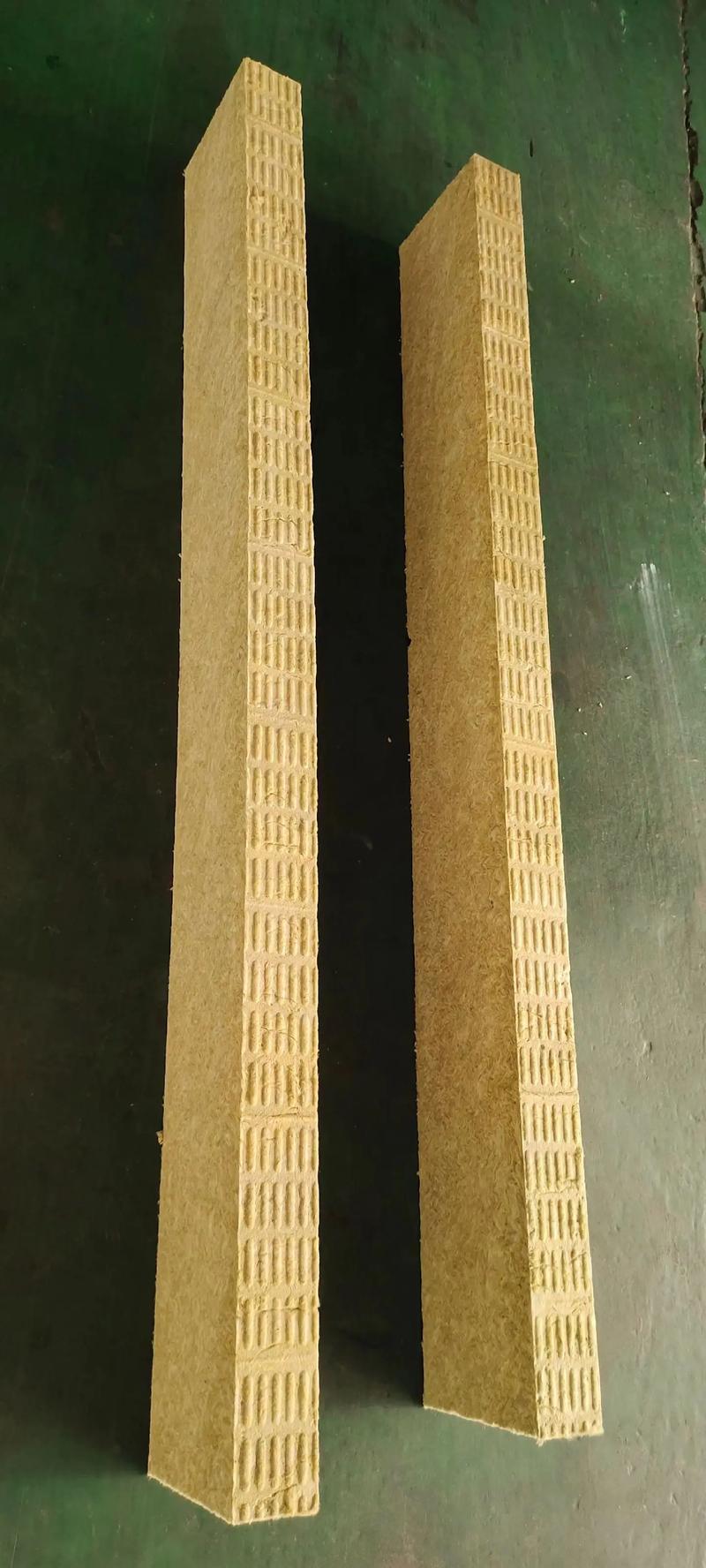
3. High Strength and Dimensional Stability – Suitable for Various Construction Methods
Compared to standard rock wool products, rock wool strips have higher density and tightly arranged fibers, offering excellent compressive and wind-load resistance. Whether used as the core of exterior insulation panels, gap filler in curtain walls, or in sandwich panel structures, they maintain long-term dimensional stability without deformation or sagging, greatly extending system service life.
4. Flexible Installation – Adaptable to Complex Structures
Rock wool strips can be customized in length, width, and thickness, and support cutting, slotting, or sectioning for fast on-site adaptation. Their elasticity allows them to automatically conform to irregular gaps during installation, providing seamless thermal insulation and fireproofing, enhancing overall efficiency.

5. Eco-Friendly and Healthy – Compliant with Green Building Standards
Made from natural minerals, rock wool contains no formaldehyde or harmful emissions. It meets green building certifications such as LEED and BREEAM, making it safer for both construction workers and occupants.
Because of these advantages, rock wool strips have evolved from being just a material to becoming a system-level energy-saving and fireproof solution. As construction moves toward “green, high-quality development,” the market potential and application prospects for rock wool strips continue to expand.
Related News


